🎉 Up to 70% Off Selected ItemsShop Sale
1 / 6
+1
Fort Peck Lakota Rifle Scabbard
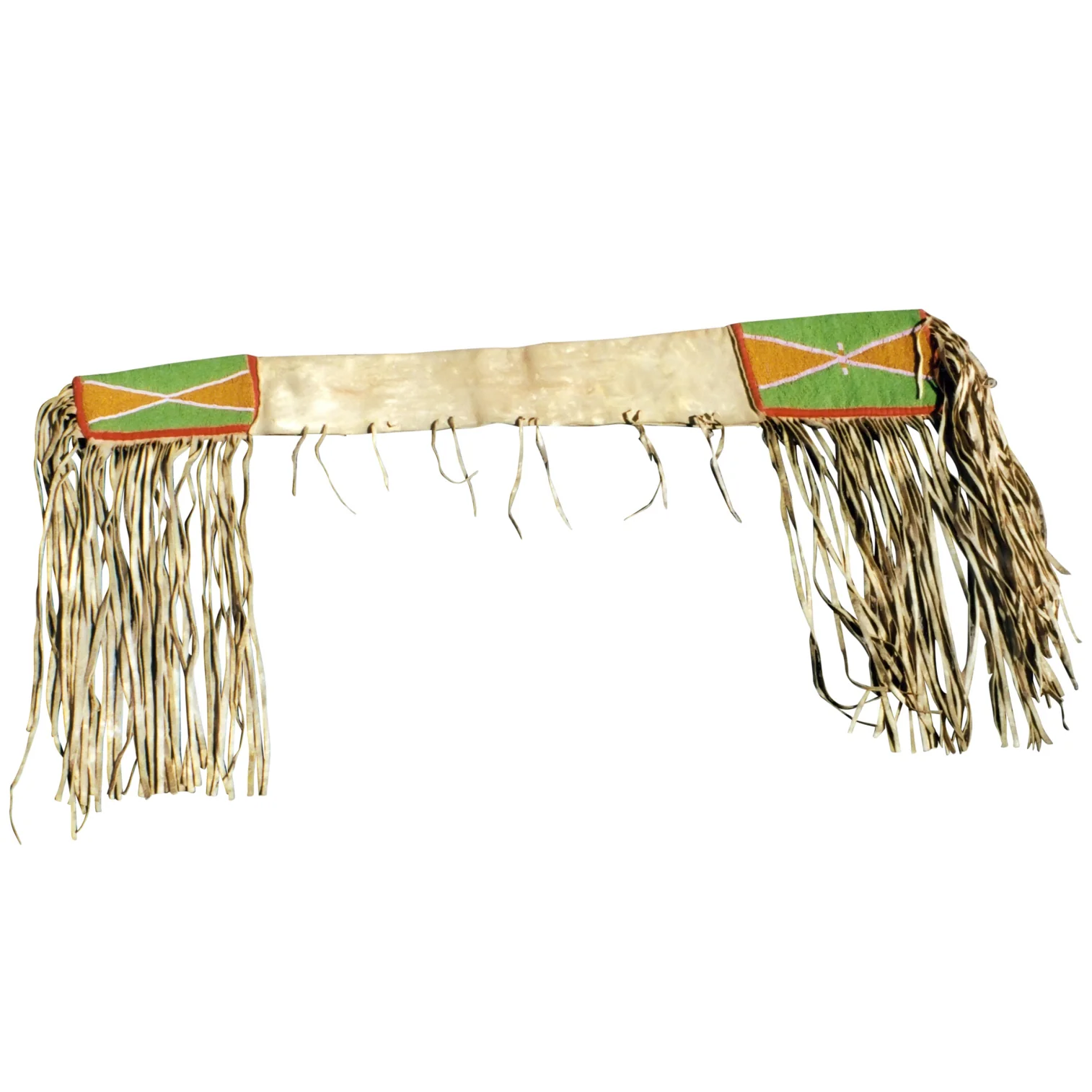
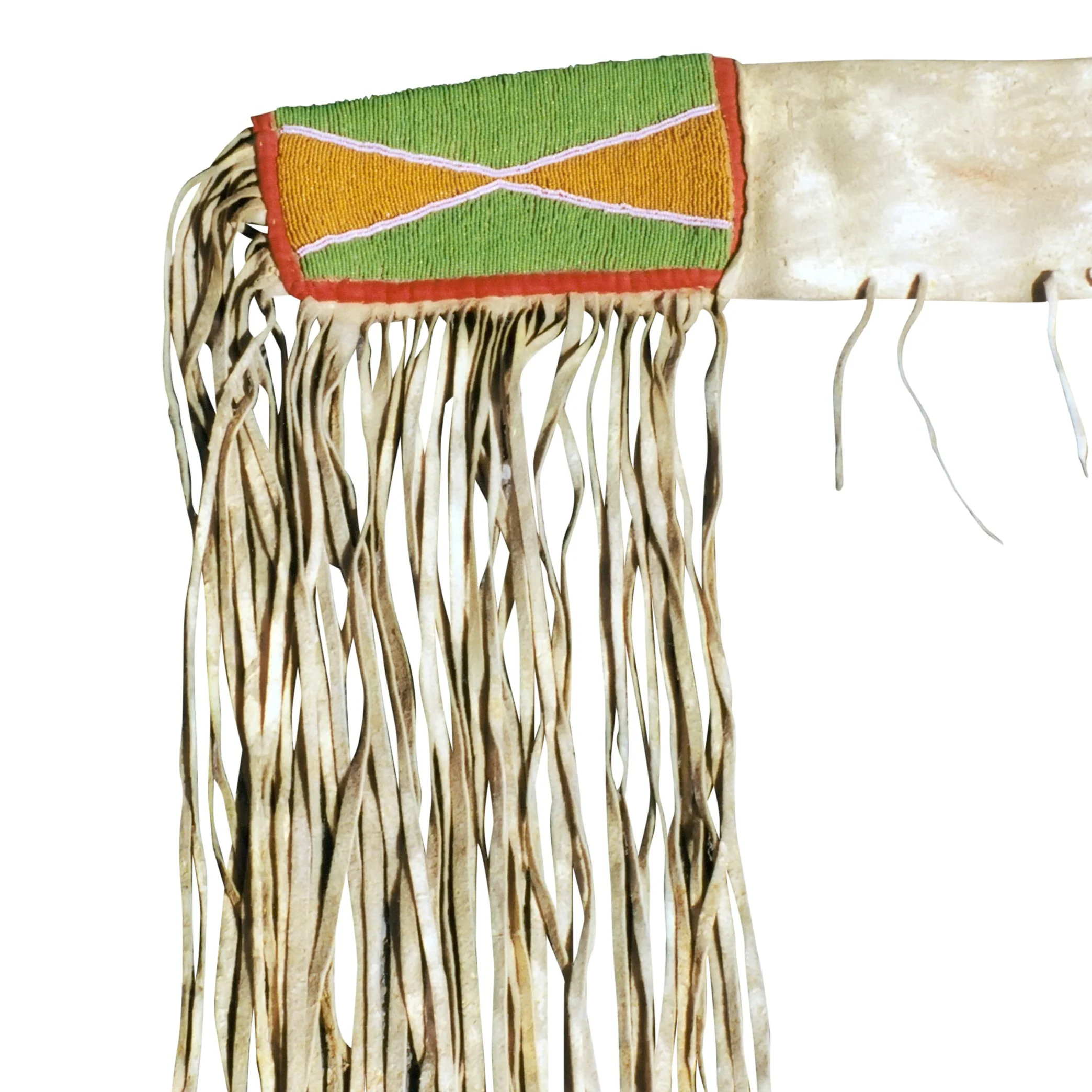
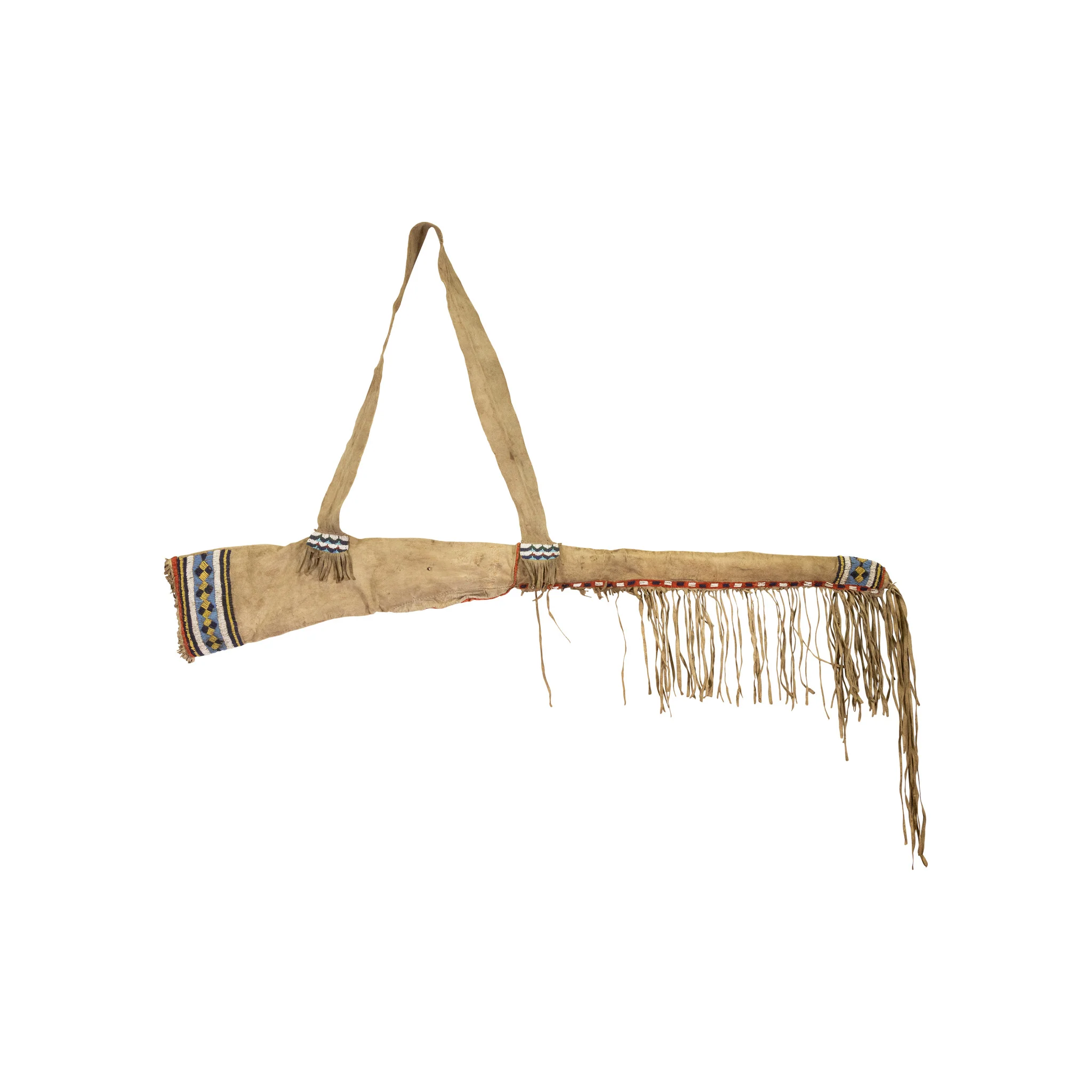
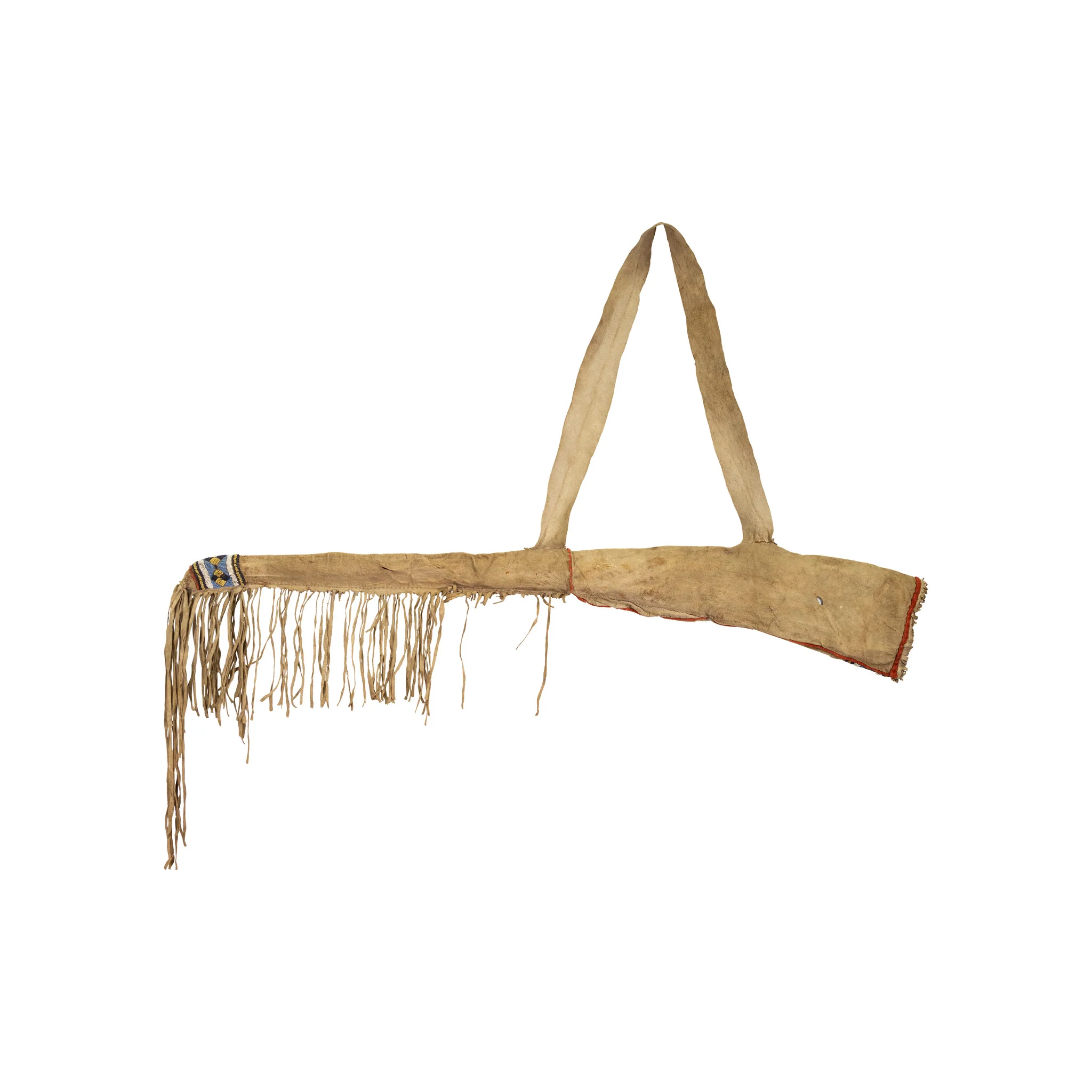
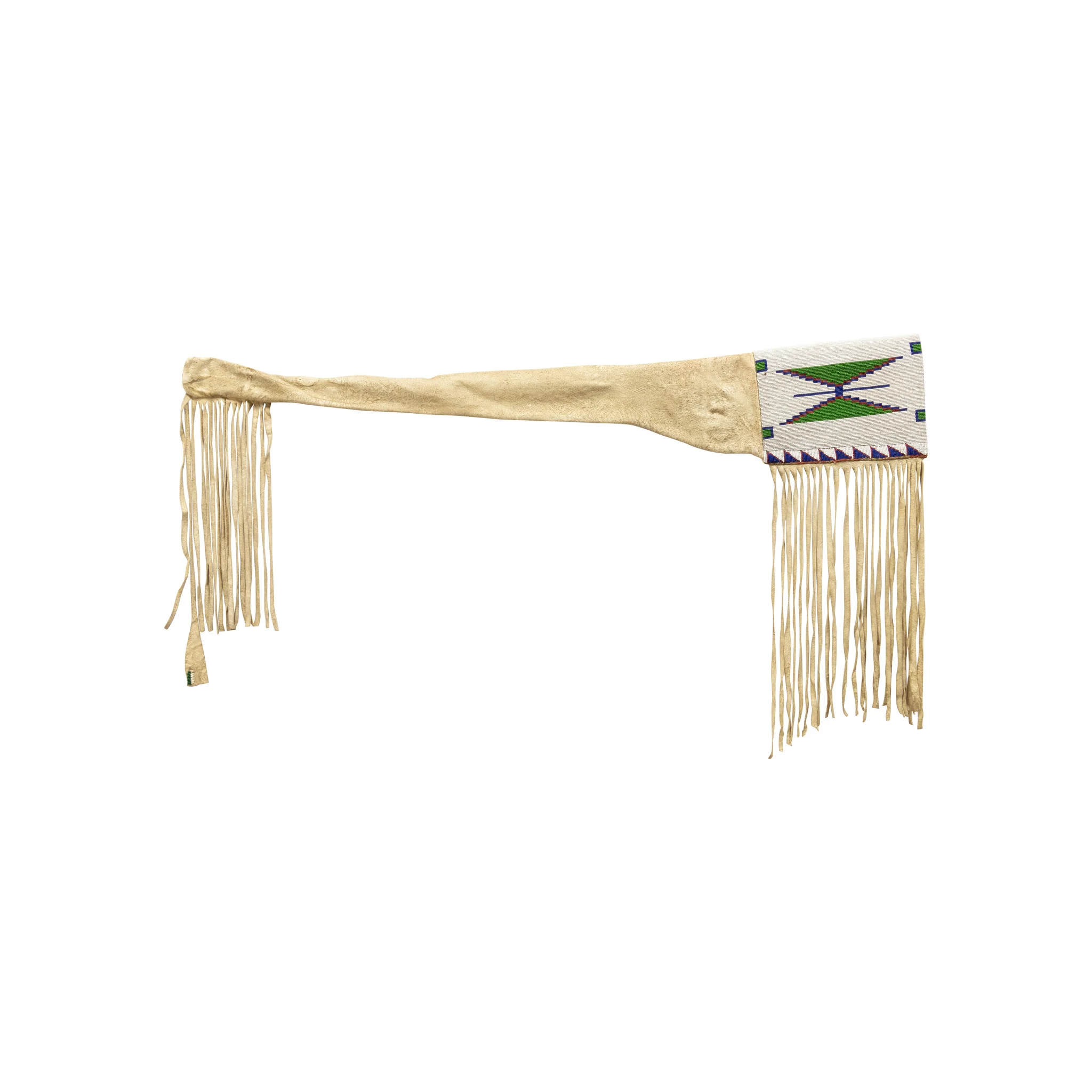
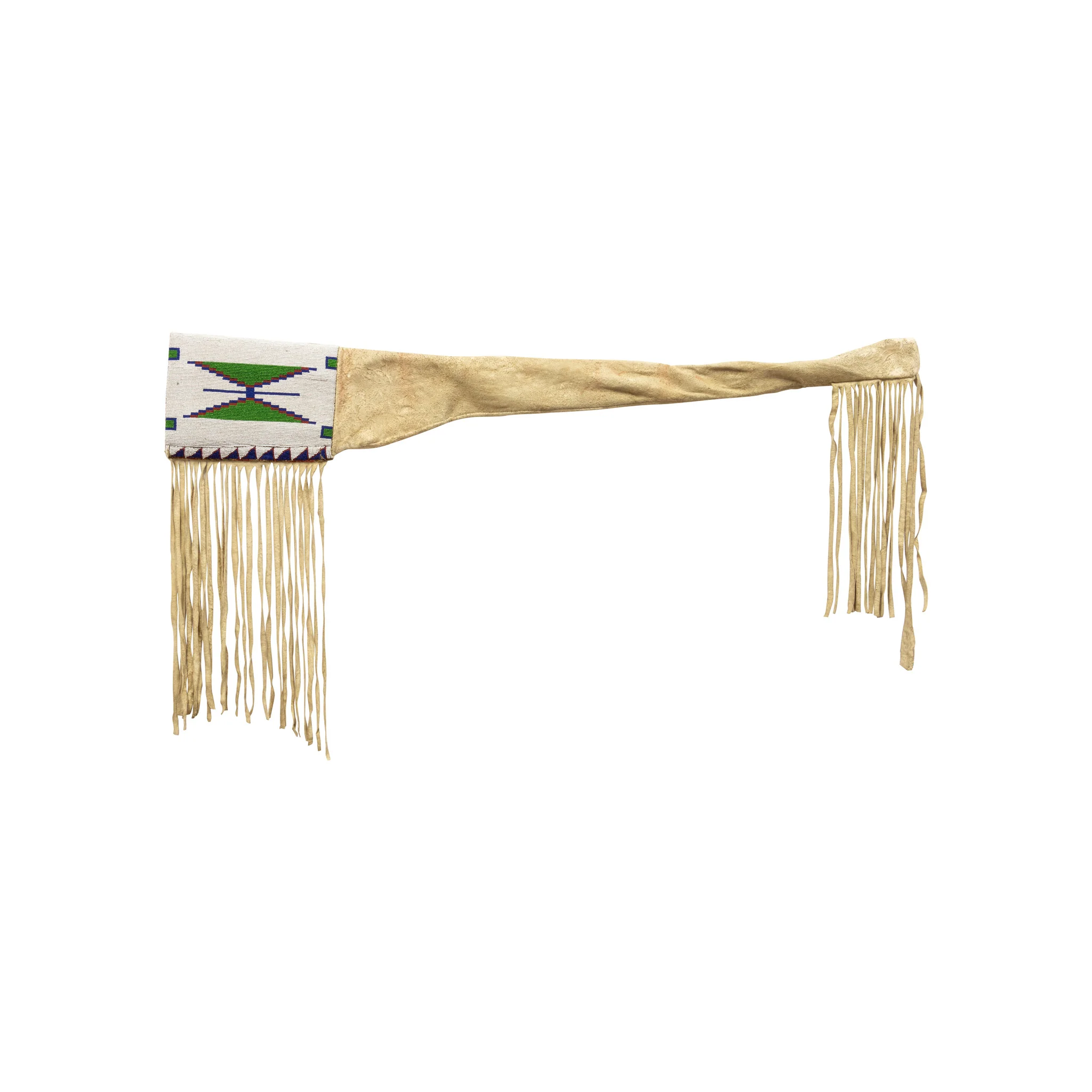
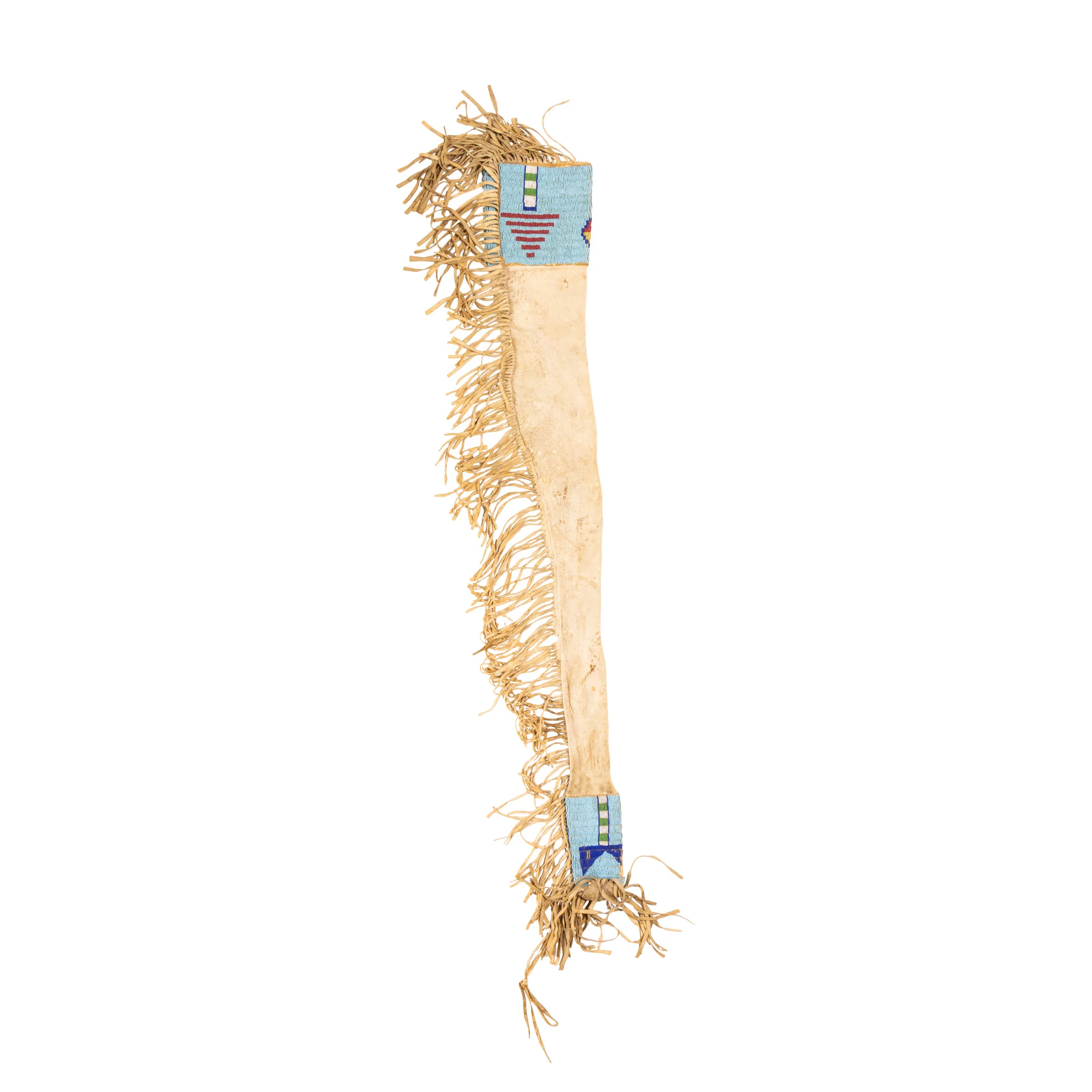
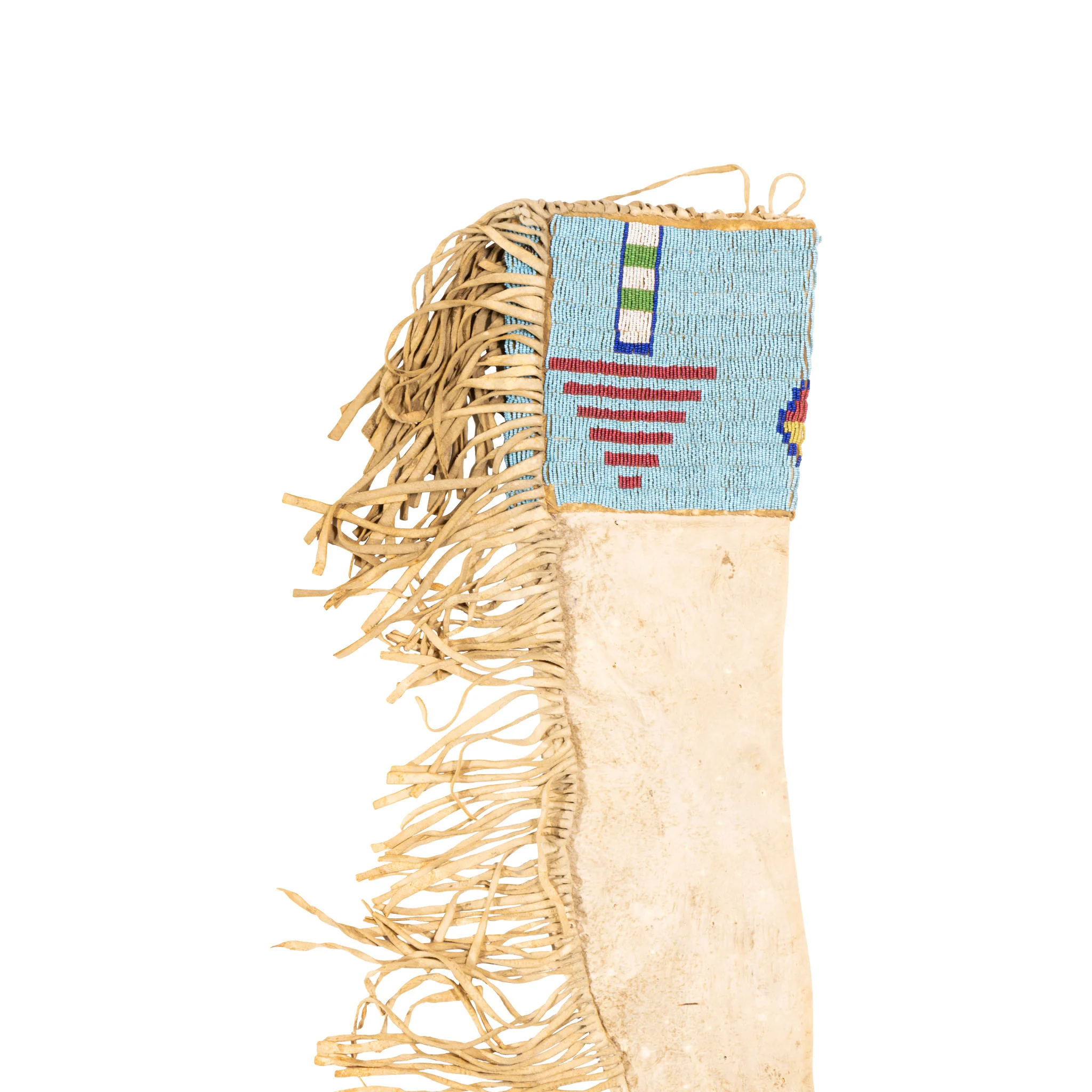
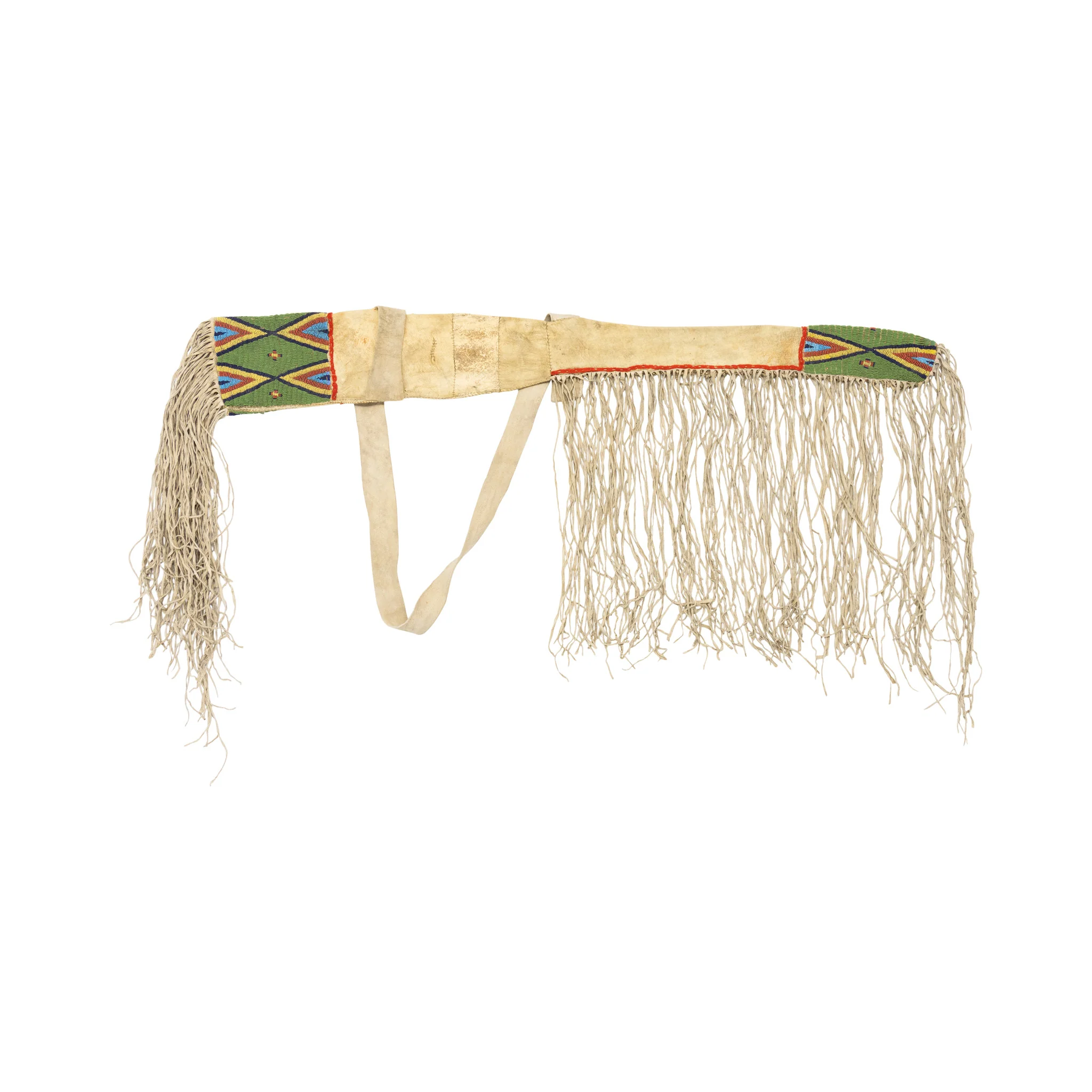
Fort Peck Lakota rifle scabbard. Attributed to Black Dog for her son Sitting White Buffalo by Wendall Grangaard. Brain tanned hide, decorated in the style of the Hunkpapa Lakota Sioux. Made for a carbine, then extended. Early lazy stitched beading in blue, yellow, and red on green. Pattern done in piercing point style with smaller four winds symbol between the points. The beading pattern was designed specifically for the warrior. Designs were generally spiritual or visionary in a manner to inspire courage in battle.
Native Americans did not have military type-rifle scabbard that attached to a saddle, so they would sling their rifle scabbard over their shoulder and carry it on their back as they rode.
The scabbard is trimmed in red trade cloth and heavily fringed, some twisted. The rifle scabbard shows considerable wear and patina.
The area of Ft. Peck was a hot bed during the Indian Wars. Originally surrounded by both Assiniboine and Sioux (Hunkpapa and Lakota) in 1870, then President Grant designated Ft. Peck reservation status and awarded the Ft. Peck tribes to the Methodist missionaries. This was done as an experiment whereby the US Military presence and influence was to be decreased and placing the reservation workers under missionary control.
Ill-fated, the Sioux Warriors of Ft. Peck joined with Sitting Bull during the Sioux Campaigns of 1876-1877. In retaliation, rations were then cut by the government to the Ft. Peck Reservation. With the drought of 1883, the Indians of Ft. Worth were faced with starvation. Years later in 1896, the US Government discontinued missionary aid to the Indian populations.
Attributed to Sitting White Buffalo, but no provenance. 41" plus fringe.
PERIOD: Late 19th Century
ORIGIN: Great Plains - Sioux, Native American
SIZE: 41" plus fringe
Fort Peck Lakota rifle scabbard. Attributed to Black Dog for her son Sitting White Buffalo by Wendall Grangaard. Brain tanned hide, decorated in the style of the Hunkpapa Lakota Sioux. Made for a carbine, then extended. Early lazy stitched beading in blue, yellow, and red on green. Pattern done in piercing point style with smaller four winds symbol between the points. The beading pattern was designed specifically for the warrior. Designs were generally spiritual or visionary in a manner to inspire courage in battle.
Native Americans did not have military type-rifle scabbard that attached to a saddle, so they would sling their rifle scabbard over their shoulder and carry it on their back as they rode.
The scabbard is trimmed in red trade cloth and heavily fringed, some twisted. The rifle scabbard shows considerable wear and patina.
The area of Ft. Peck was a hot bed during the Indian Wars. Originally surrounded by both Assiniboine and Sioux (Hunkpapa and Lakota) in 1870, then President Grant designated Ft. Peck reservation status and awarded the Ft. Peck tribes to the Methodist missionaries. This was done as an experiment whereby the US Military presence and influence was to be decreased and placing the reservation workers under missionary control.
Ill-fated, the Sioux Warriors of Ft. Peck joined with Sitting Bull during the Sioux Campaigns of 1876-1877. In retaliation, rations were then cut by the government to the Ft. Peck Reservation. With the drought of 1883, the Indians of Ft. Worth were faced with starvation. Years later in 1896, the US Government discontinued missionary aid to the Indian populations.
Attributed to Sitting White Buffalo, but no provenance. 41" plus fringe.
PERIOD: Late 19th Century
ORIGIN: Great Plains - Sioux, Native American
SIZE: 41" plus fringe
$8,750.00
Original: $25,000.00
-65%Fort Peck Lakota Rifle Scabbard—
$25,000.00
$8,750.00Description
Fort Peck Lakota rifle scabbard. Attributed to Black Dog for her son Sitting White Buffalo by Wendall Grangaard. Brain tanned hide, decorated in the style of the Hunkpapa Lakota Sioux. Made for a carbine, then extended. Early lazy stitched beading in blue, yellow, and red on green. Pattern done in piercing point style with smaller four winds symbol between the points. The beading pattern was designed specifically for the warrior. Designs were generally spiritual or visionary in a manner to inspire courage in battle.
Native Americans did not have military type-rifle scabbard that attached to a saddle, so they would sling their rifle scabbard over their shoulder and carry it on their back as they rode.
The scabbard is trimmed in red trade cloth and heavily fringed, some twisted. The rifle scabbard shows considerable wear and patina.
The area of Ft. Peck was a hot bed during the Indian Wars. Originally surrounded by both Assiniboine and Sioux (Hunkpapa and Lakota) in 1870, then President Grant designated Ft. Peck reservation status and awarded the Ft. Peck tribes to the Methodist missionaries. This was done as an experiment whereby the US Military presence and influence was to be decreased and placing the reservation workers under missionary control.
Ill-fated, the Sioux Warriors of Ft. Peck joined with Sitting Bull during the Sioux Campaigns of 1876-1877. In retaliation, rations were then cut by the government to the Ft. Peck Reservation. With the drought of 1883, the Indians of Ft. Worth were faced with starvation. Years later in 1896, the US Government discontinued missionary aid to the Indian populations.
Attributed to Sitting White Buffalo, but no provenance. 41" plus fringe.
PERIOD: Late 19th Century
ORIGIN: Great Plains - Sioux, Native American
SIZE: 41" plus fringe