🎉 Up to 70% Off Selected ItemsShop Sale
1 / 3
Inupiaq Baleen Basket by Elijah Attungana
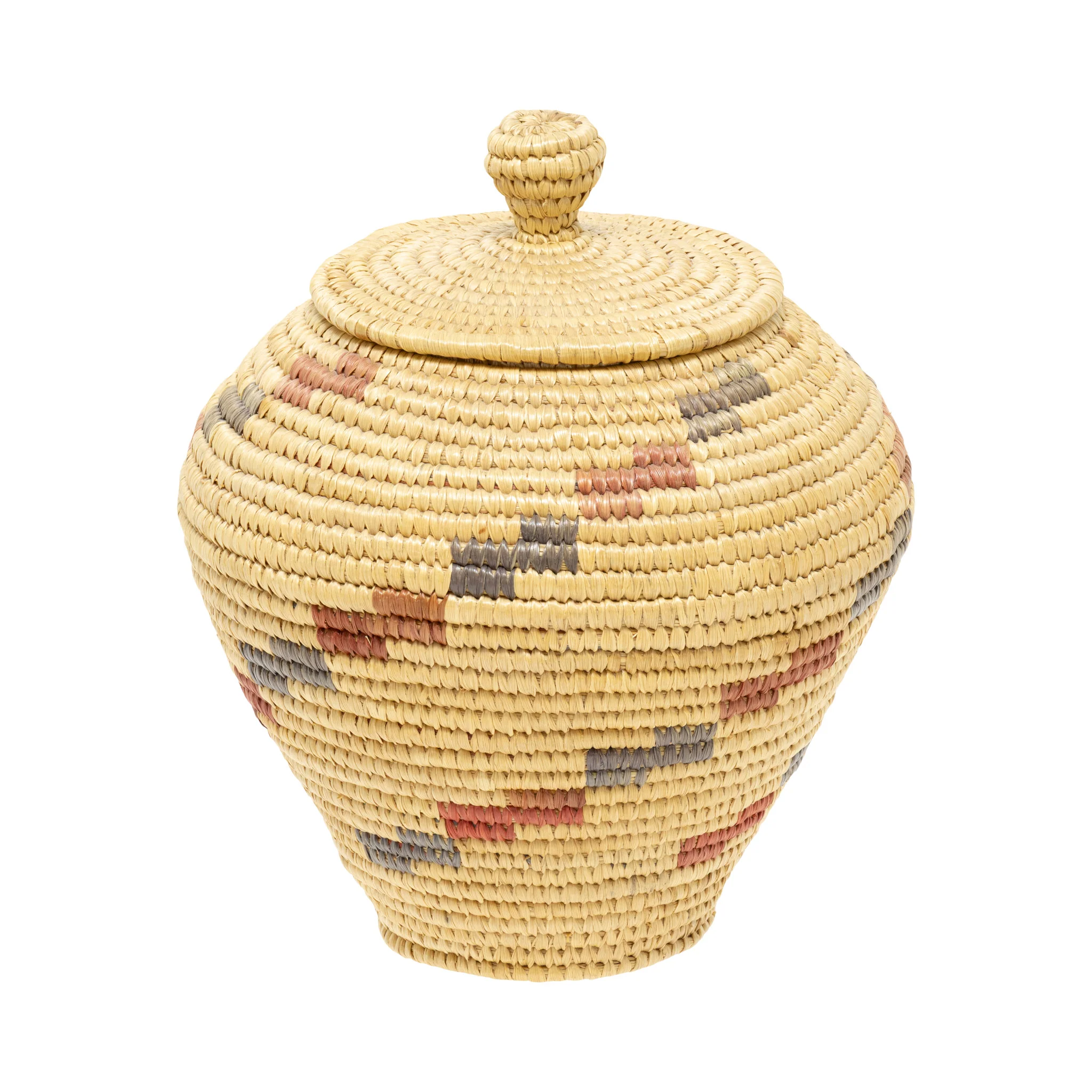
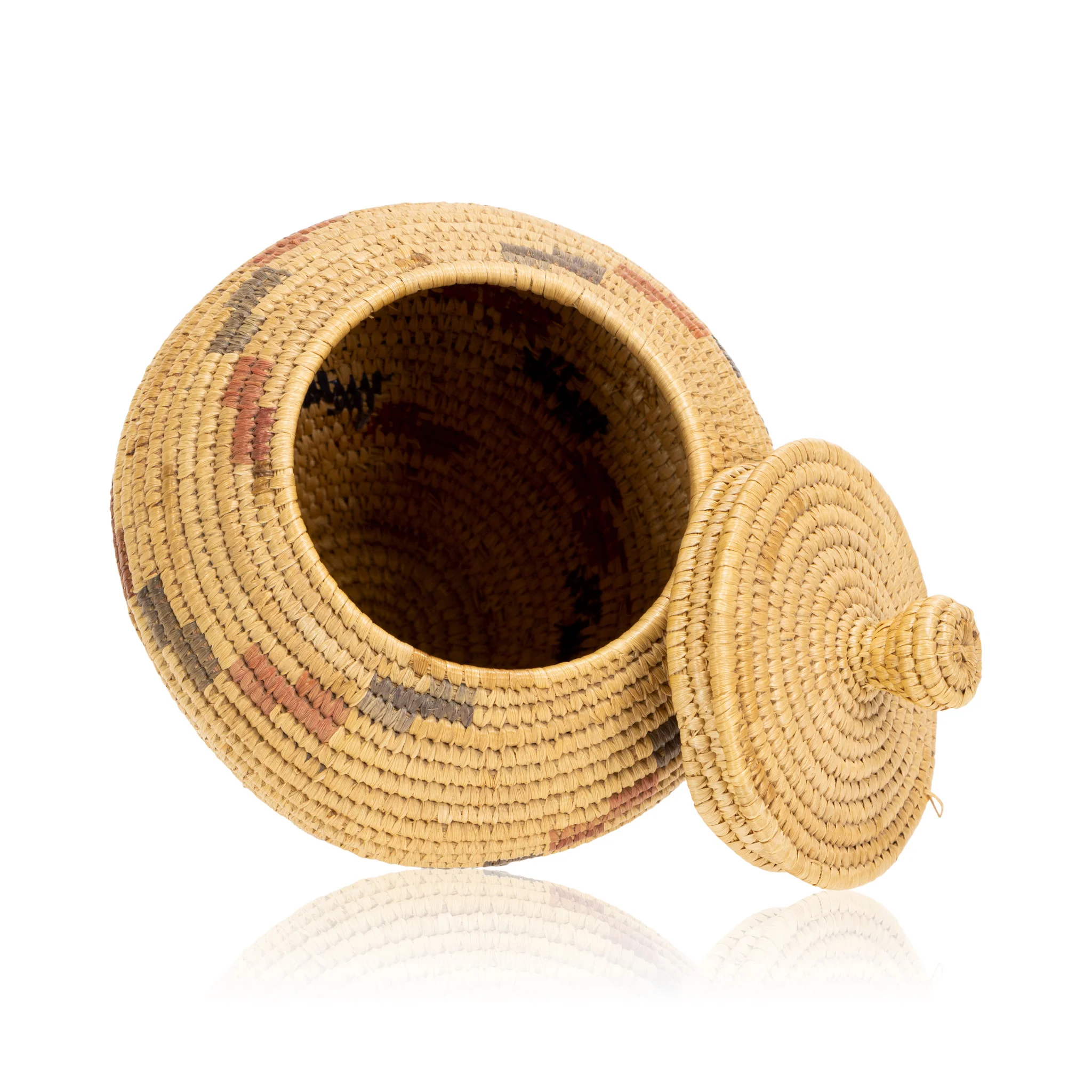
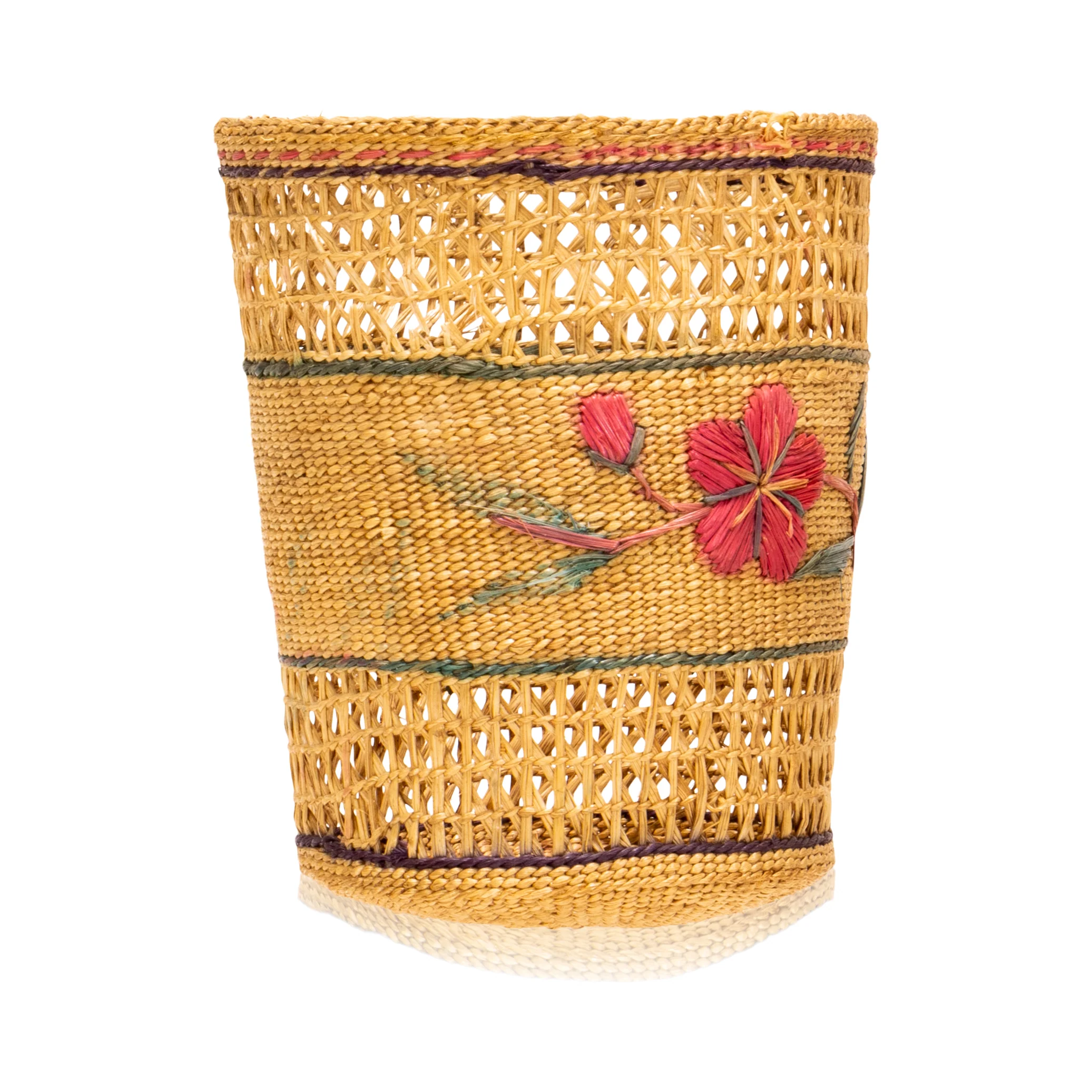
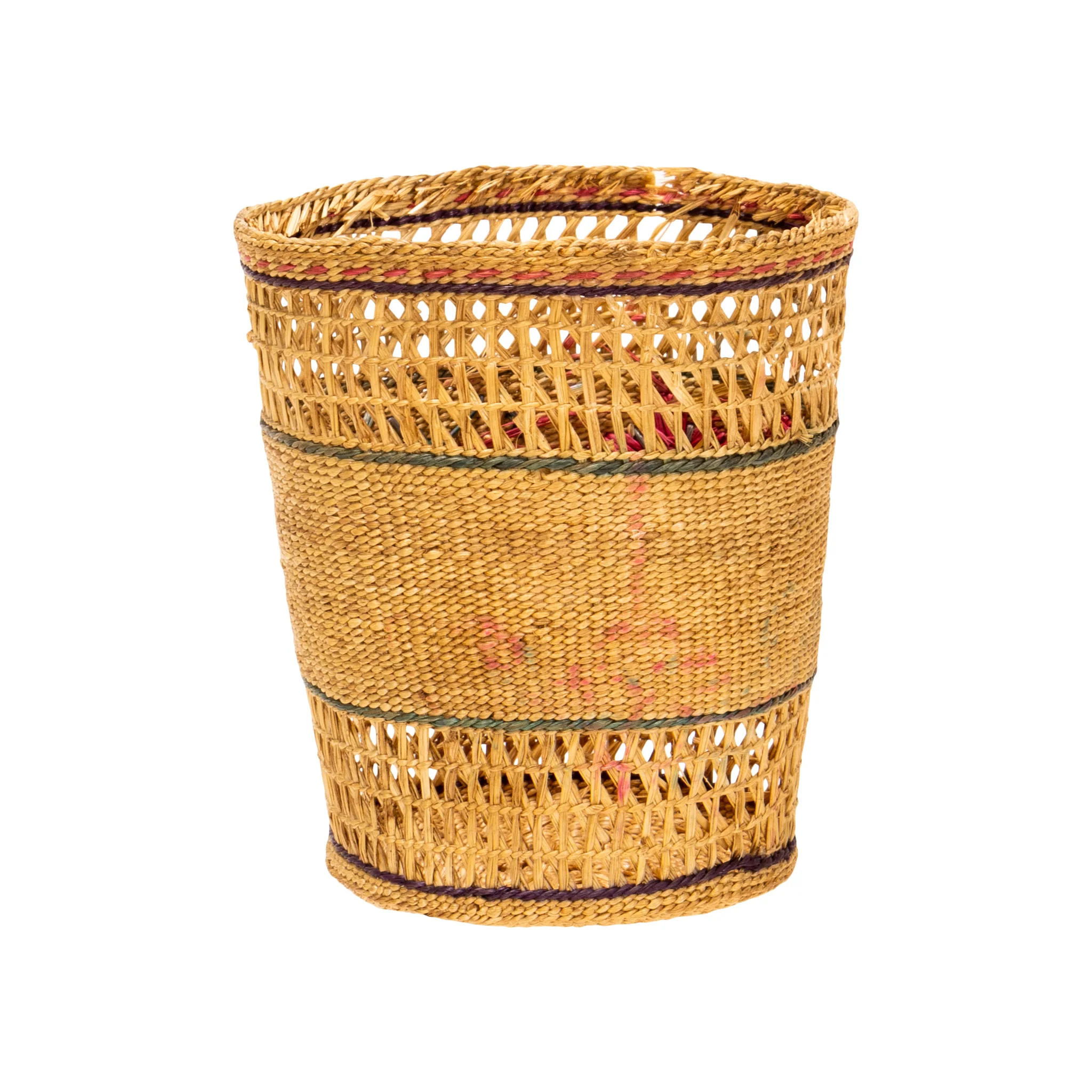
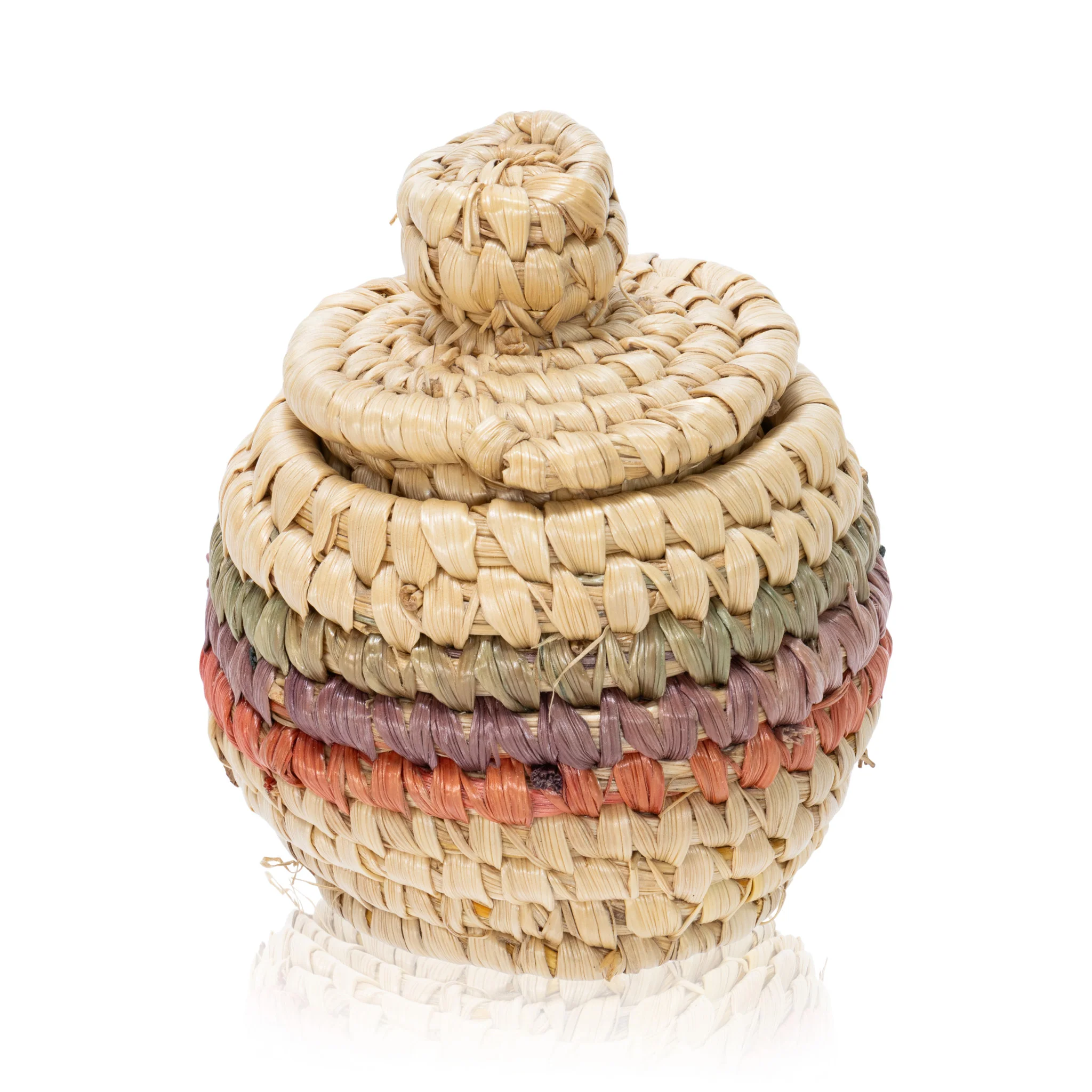
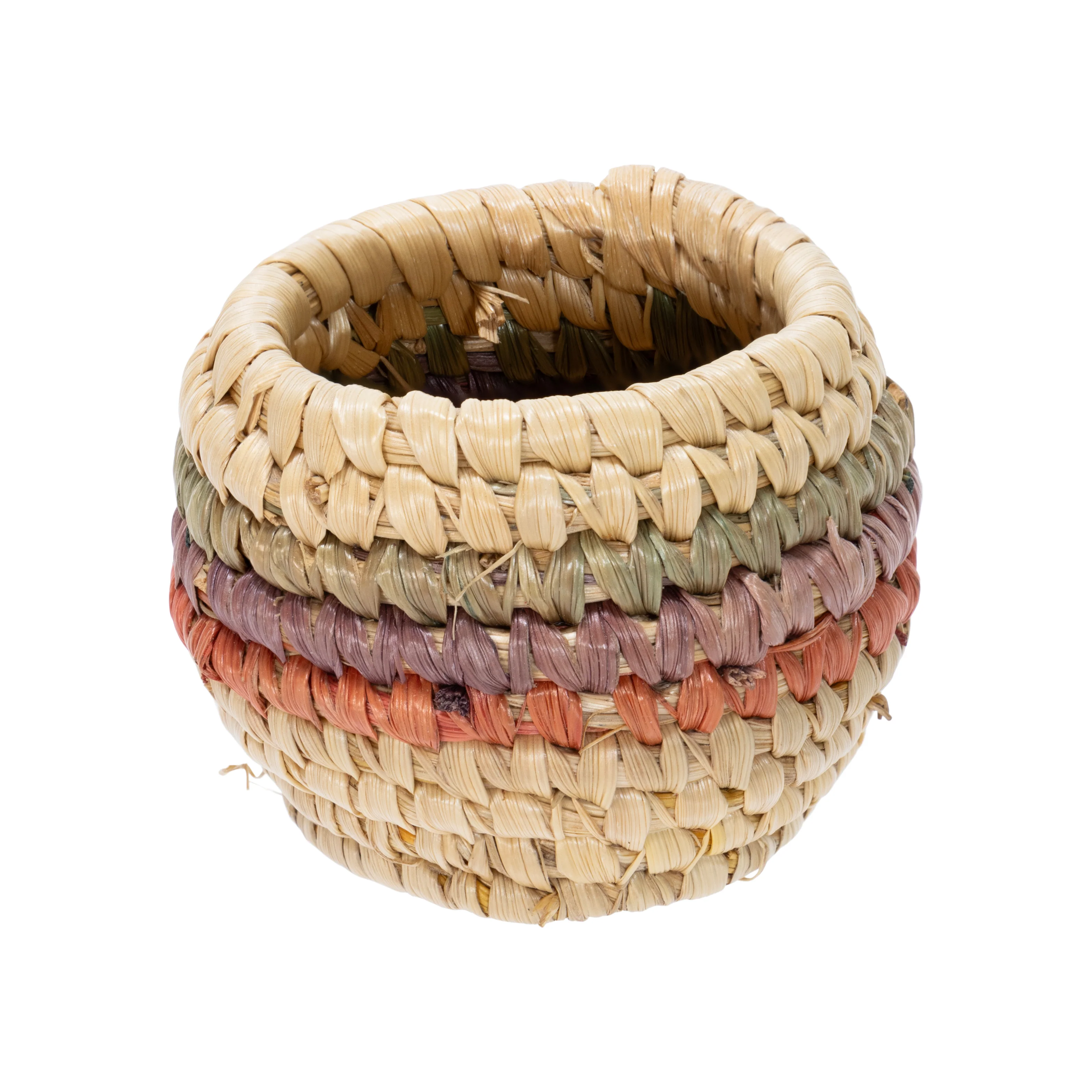
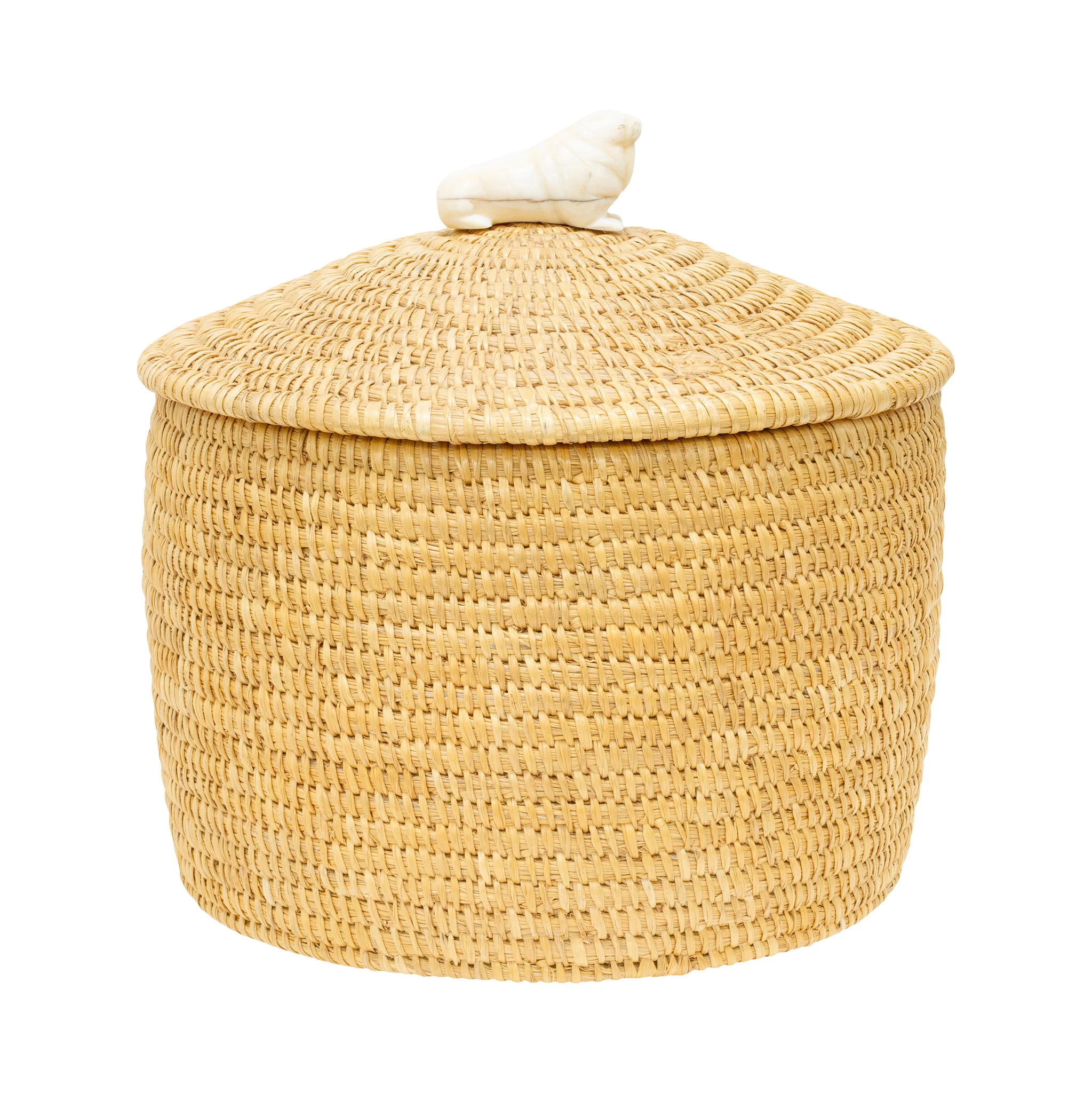
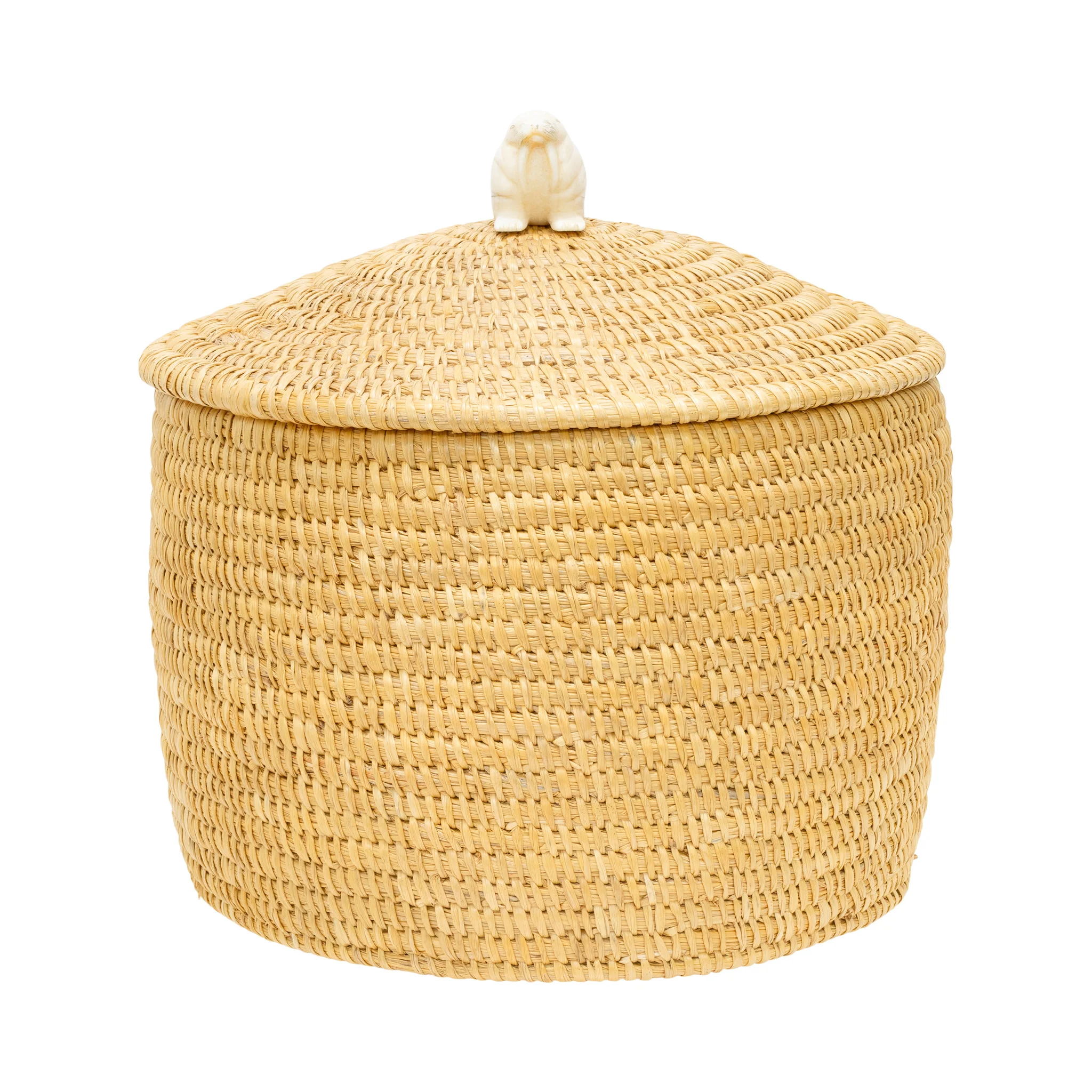
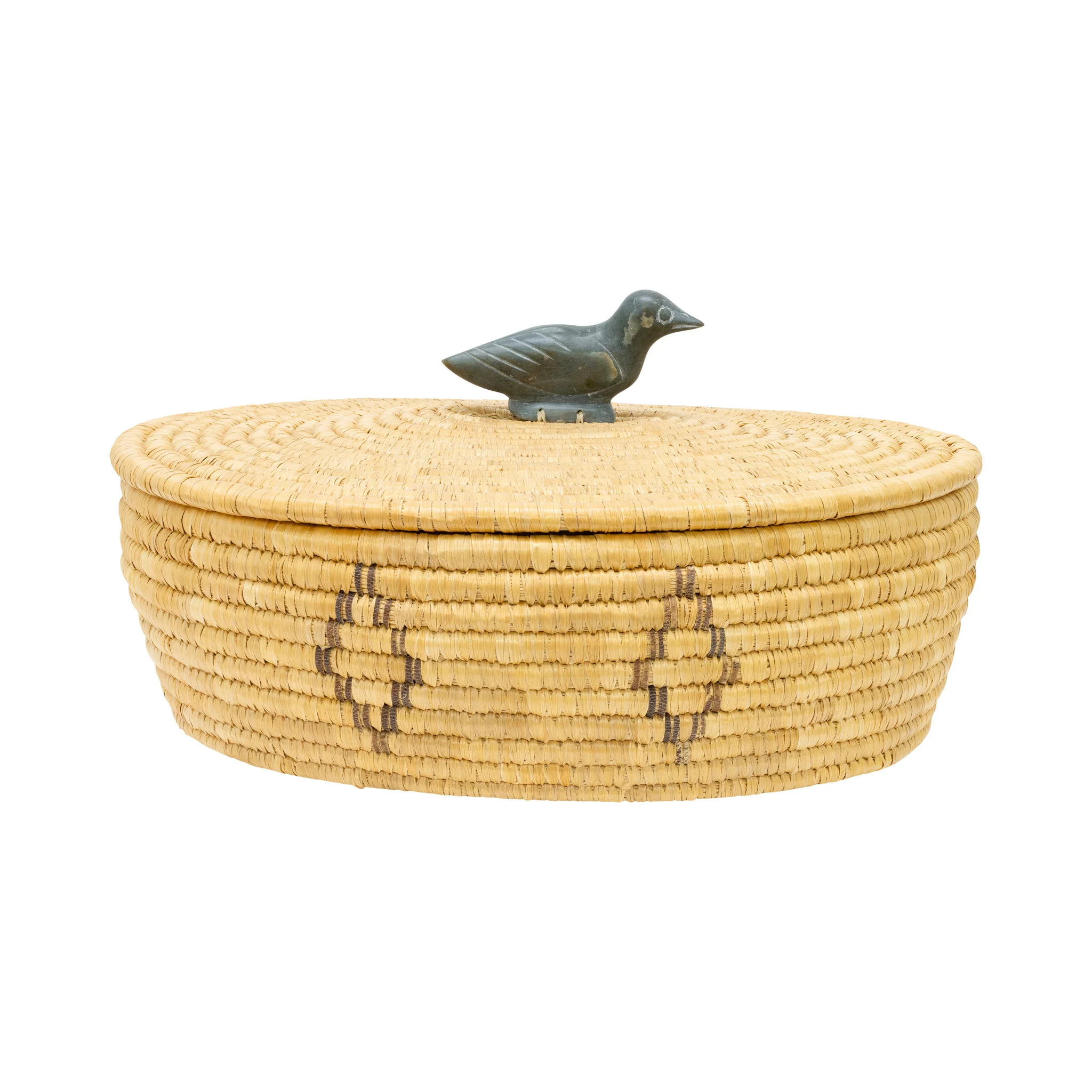
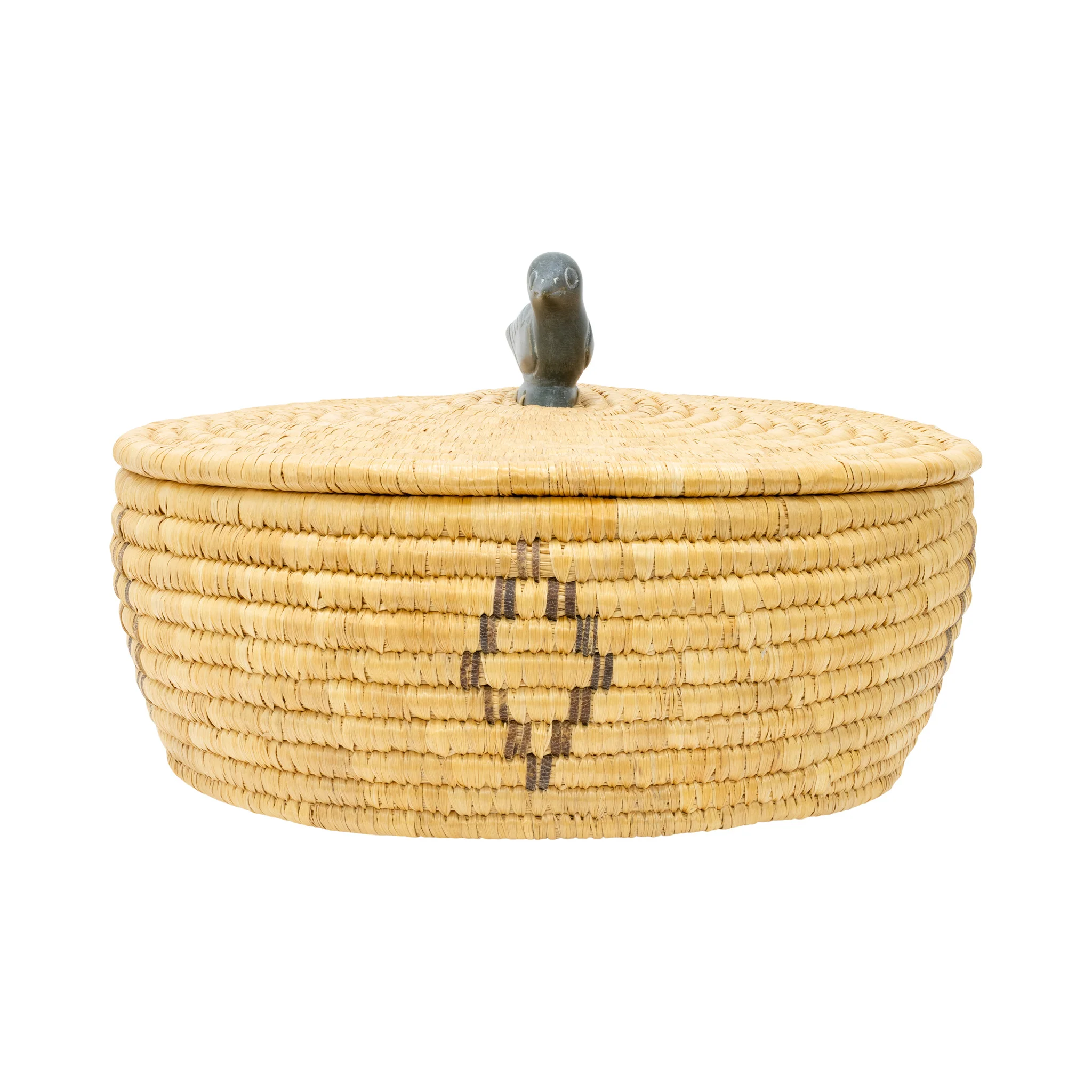
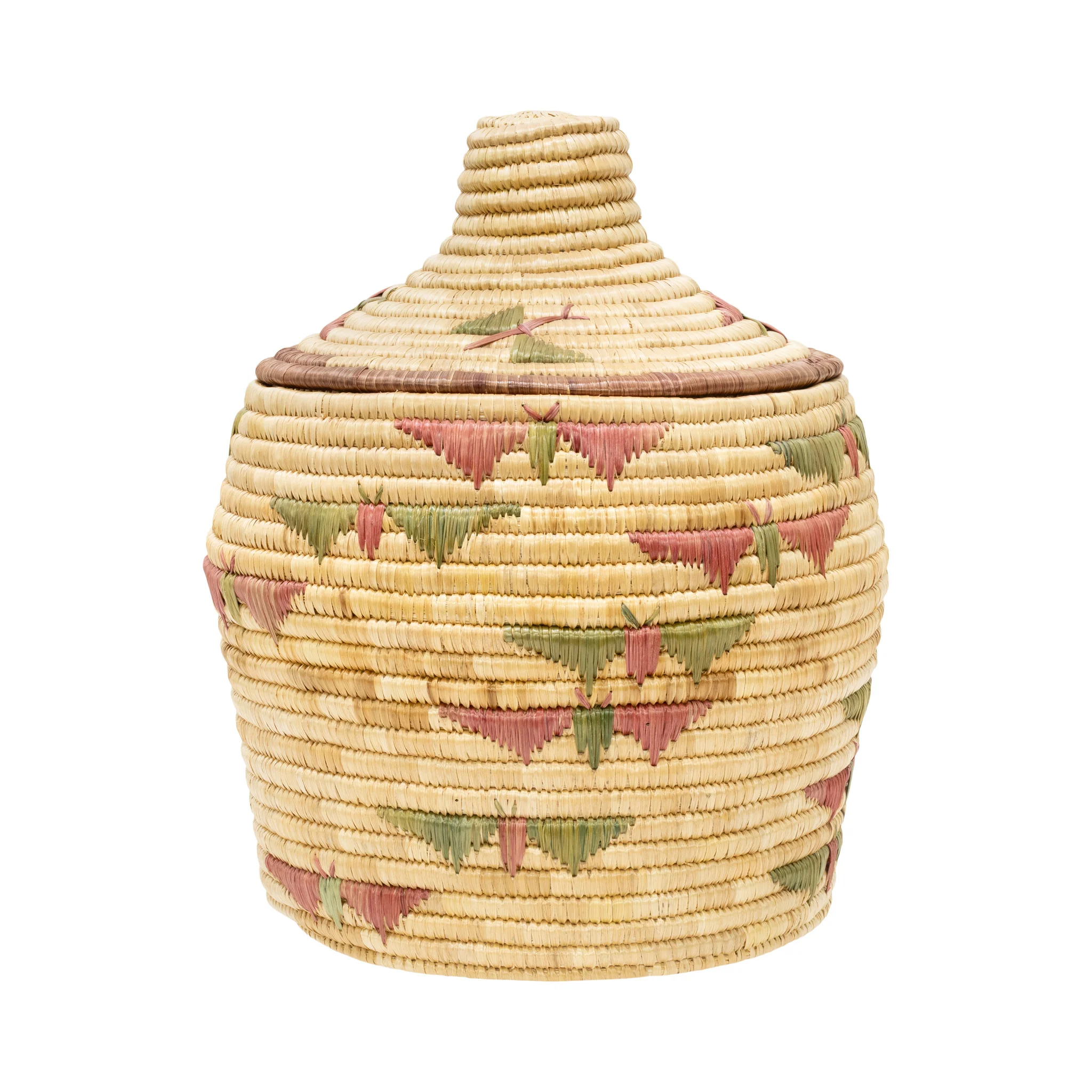
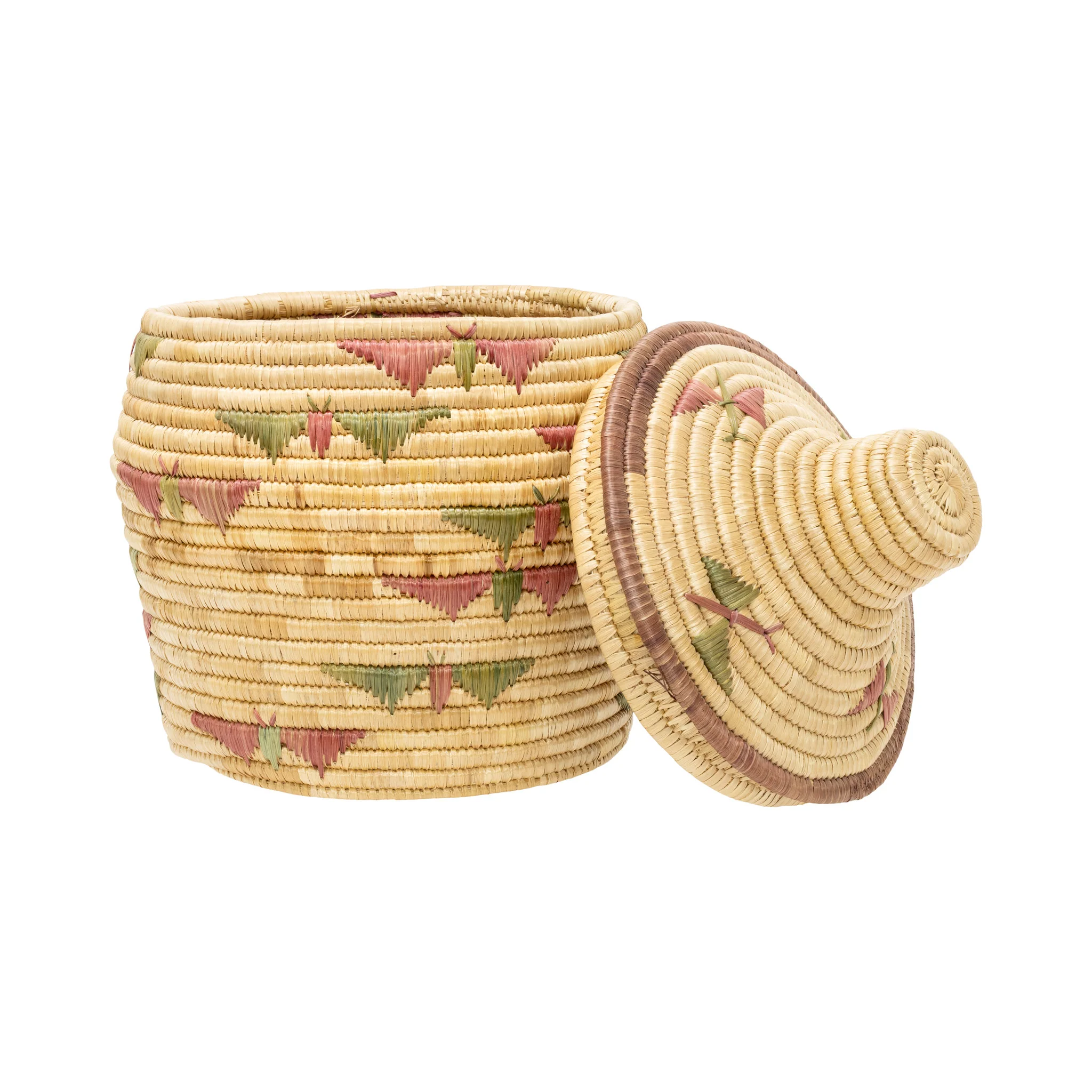
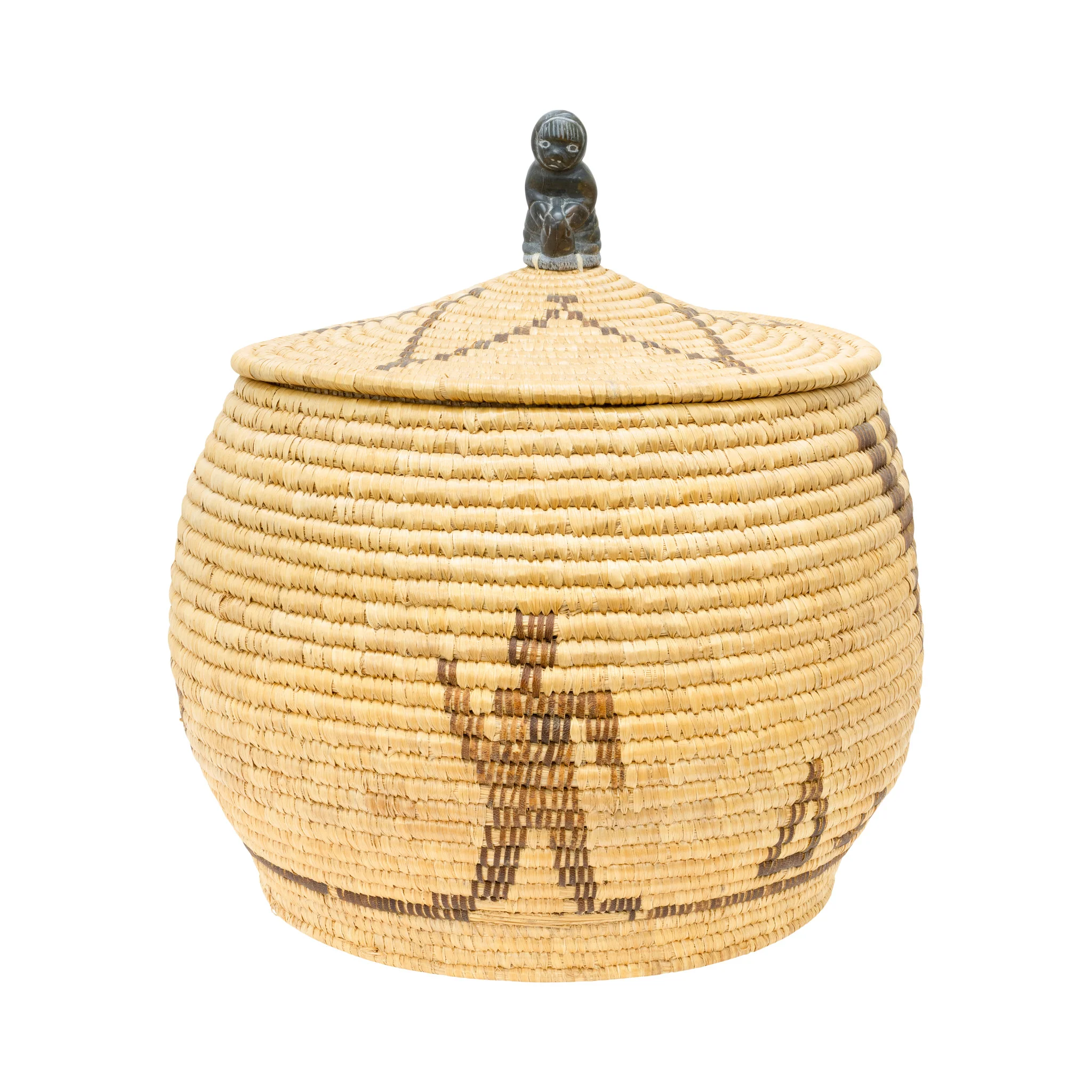
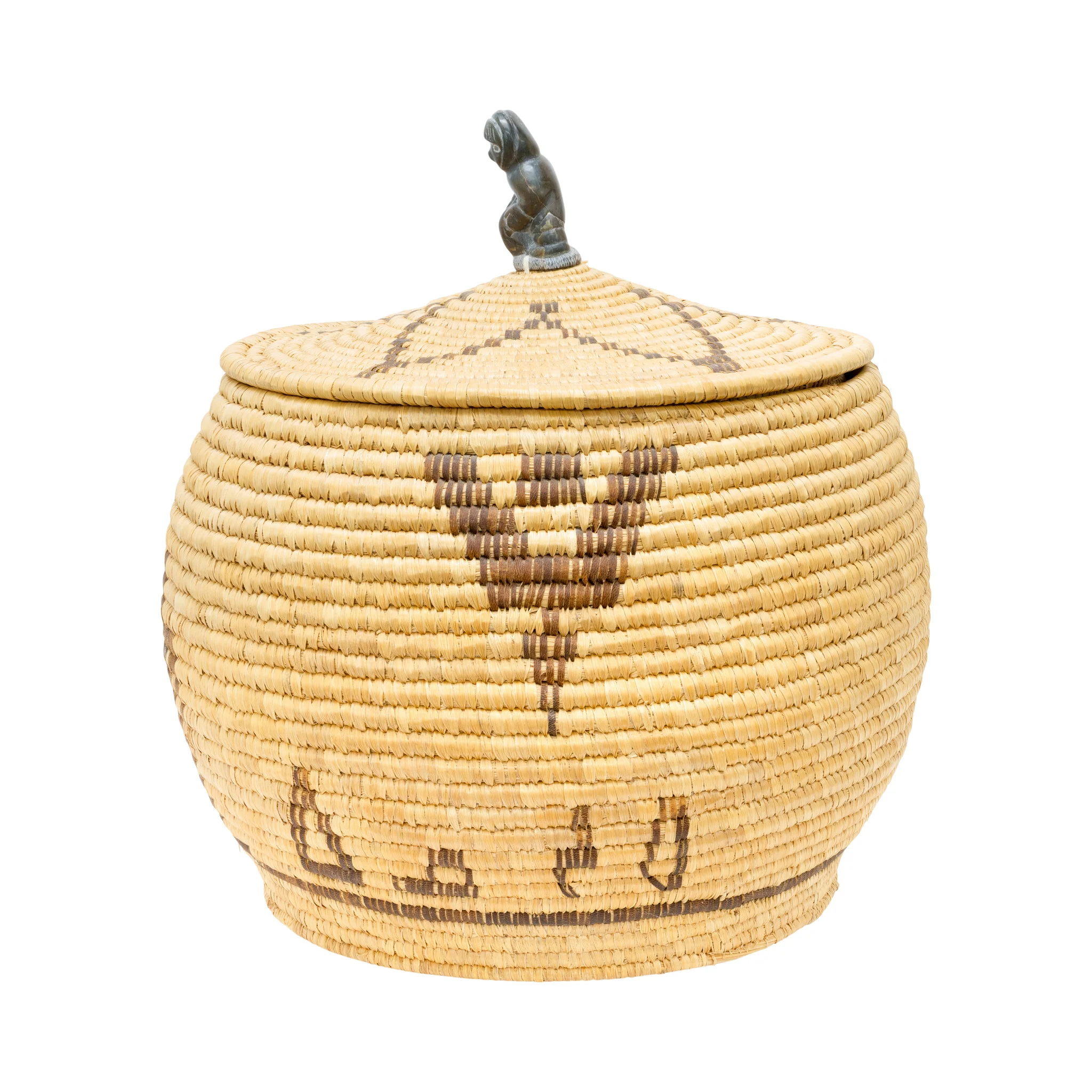
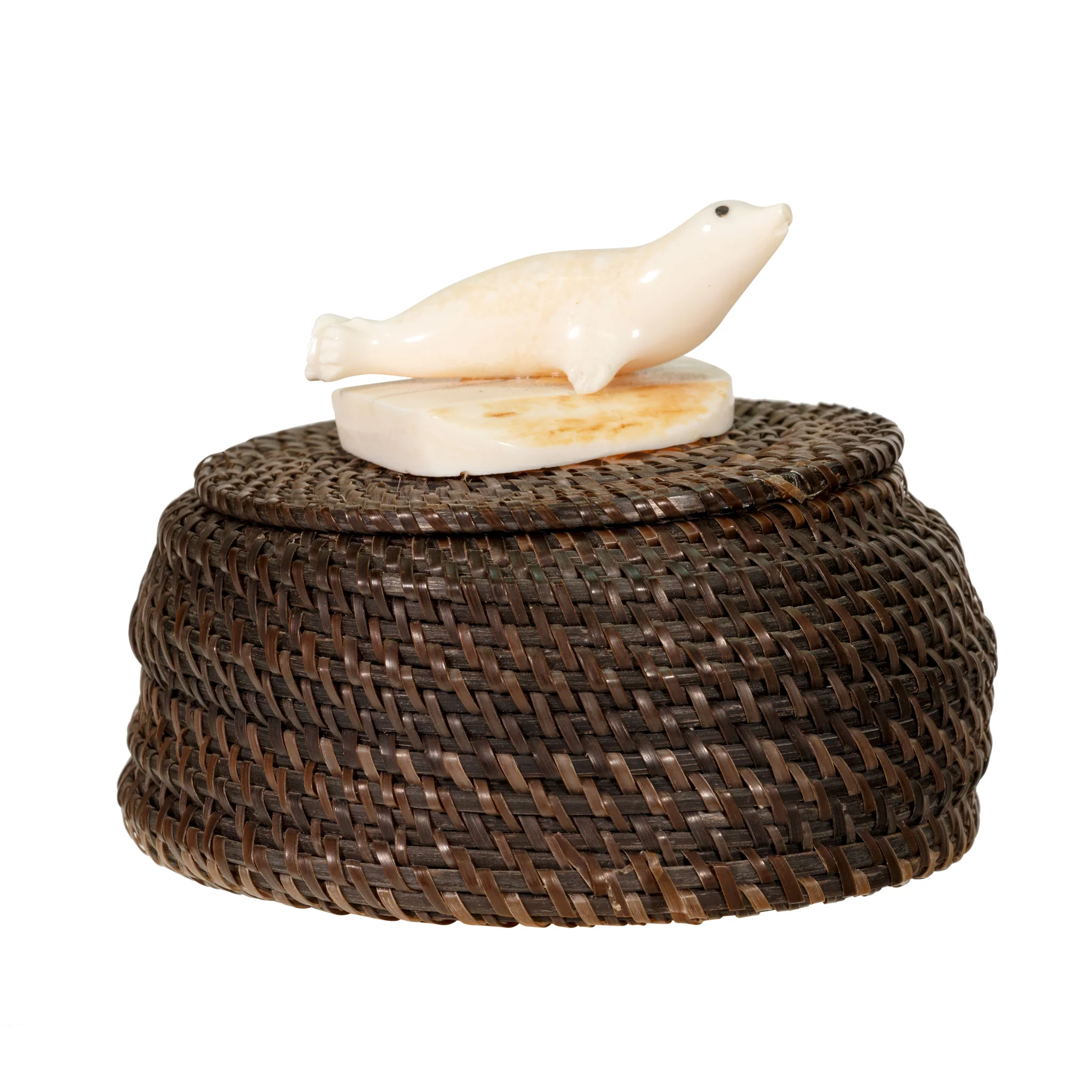
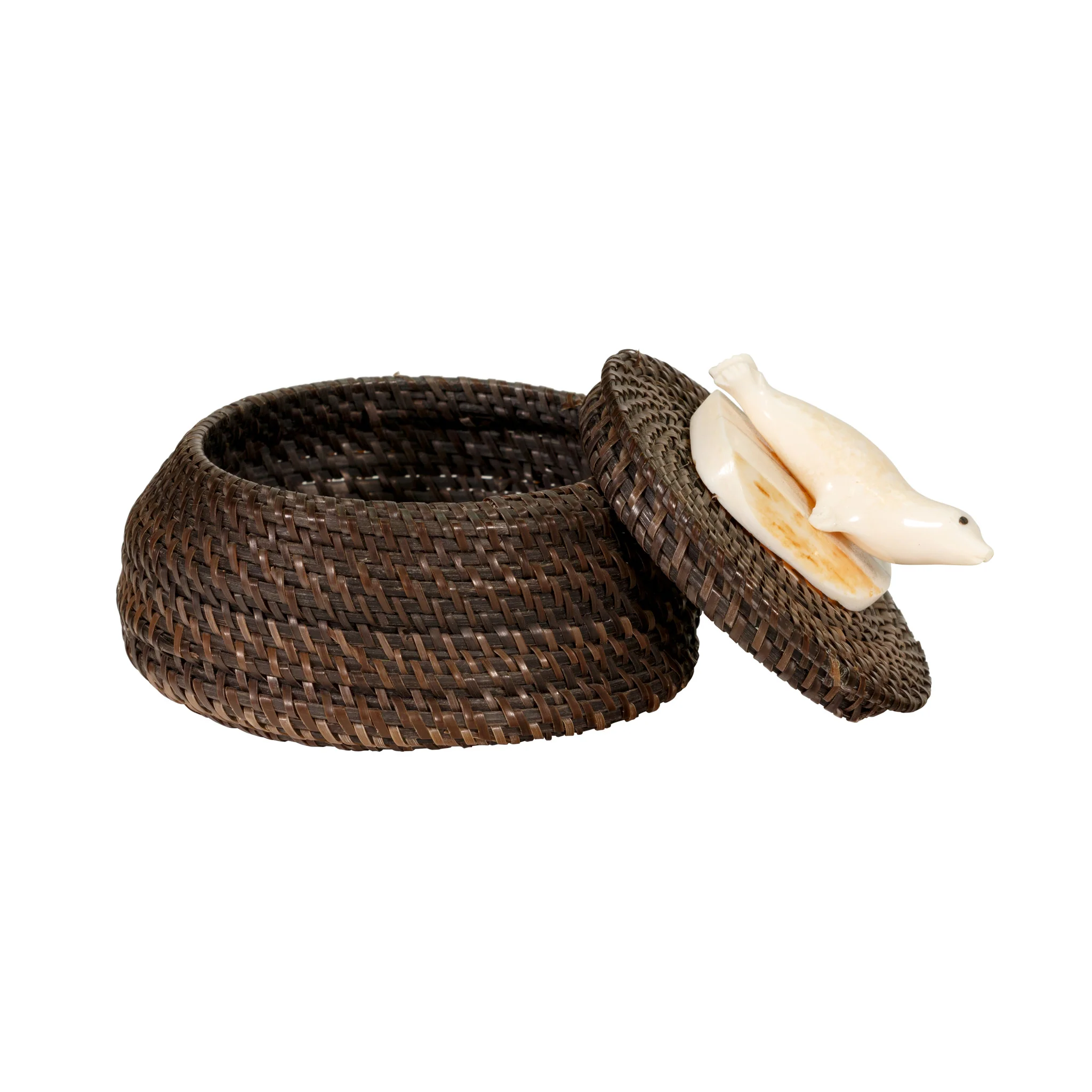
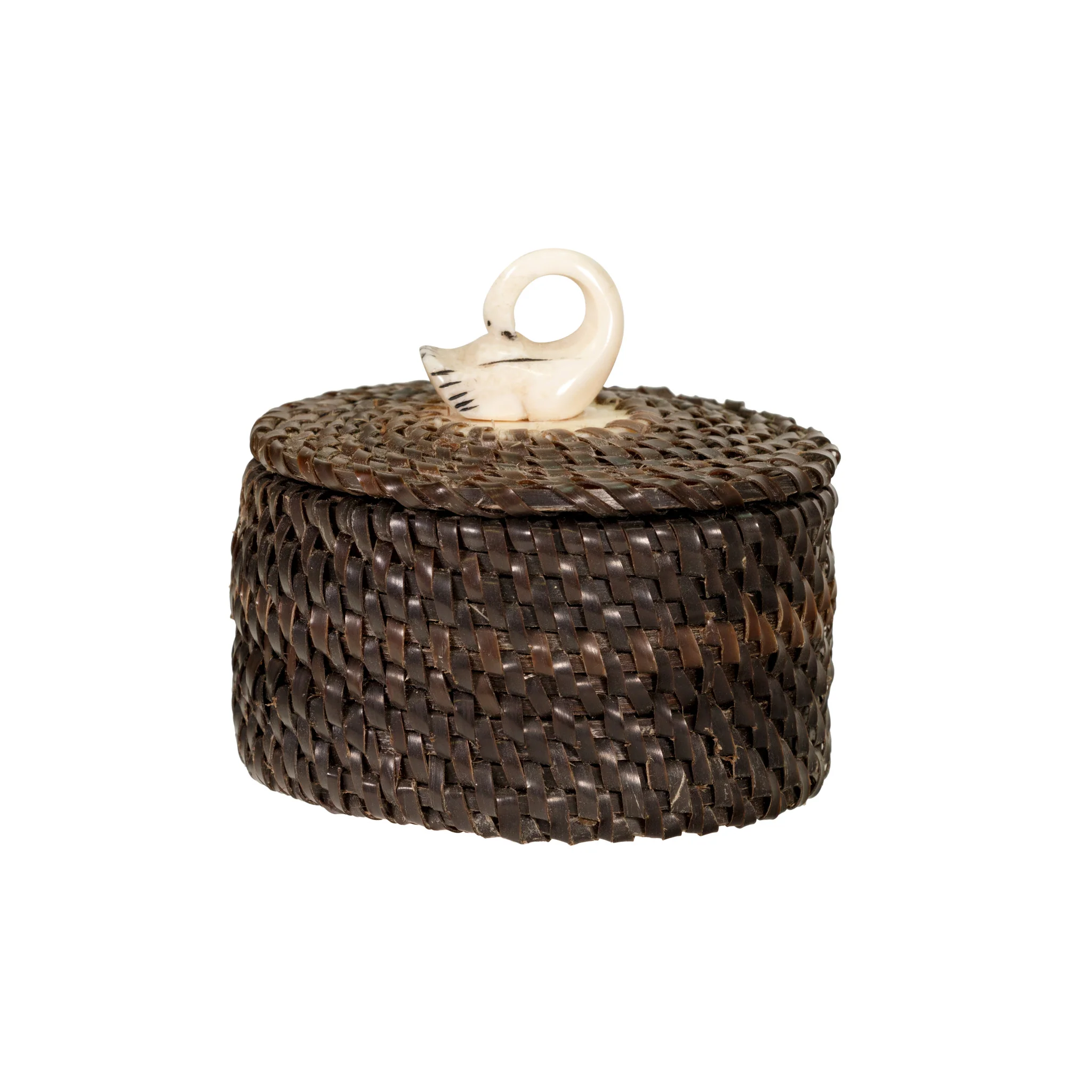
Inupiaq baleen basket by Elijah Attungana (1933-2011). Lidded basket having a walrus ivory swan as a finial. 3 1/2" x 2 1/2"
This baleen basket is by the late Elijah Attungana (1933-2011), an Inupiaq baleen basket weaver from the community of Point Hope, Alaska. Attungana was widely regarded as a master weaver who innovated shapes for baleen baskets that featured stacked tiers and experimental forms. His trademark was a small Snow Goose or Swan ivory finial with an arched neck that formed a loop, just as on this example.
Attungana learned to weave baleen from his father, Patrick (1909-1993), who was also a highly regarded baleen basket weaver. Based on the patina on the baleen and the ivory finial, and the cylindrical shape of the basket, it’s likely that this is an earlier example of Attungana’s work. Attungana’s pieces can be found in many prominent public and private collections, and his work has been published in catalogues for the Institute of Alaska Native Arts.
Today, there are only a handful of people who weave baleen baskets and in limited areas. Most baskets are twined. The baleen is stripped, soaked in water and then woven. Typically, weavers start these round baskets with an ivory disc at the bottom, which has holes around its periphery. They then finish the top with an ivory or bone ornamenting the lid, often adorned with finial figures. Only Alaskan Natives are allowed to harvest and use baleen.
PERIOD: Early 20th Century
ORIGIN: Arctic - Unknown, Native American
SIZE: 3 1/2" x 2 1/2"
Inupiaq baleen basket by Elijah Attungana (1933-2011). Lidded basket having a walrus ivory swan as a finial. 3 1/2" x 2 1/2"
This baleen basket is by the late Elijah Attungana (1933-2011), an Inupiaq baleen basket weaver from the community of Point Hope, Alaska. Attungana was widely regarded as a master weaver who innovated shapes for baleen baskets that featured stacked tiers and experimental forms. His trademark was a small Snow Goose or Swan ivory finial with an arched neck that formed a loop, just as on this example.
Attungana learned to weave baleen from his father, Patrick (1909-1993), who was also a highly regarded baleen basket weaver. Based on the patina on the baleen and the ivory finial, and the cylindrical shape of the basket, it’s likely that this is an earlier example of Attungana’s work. Attungana’s pieces can be found in many prominent public and private collections, and his work has been published in catalogues for the Institute of Alaska Native Arts.
Today, there are only a handful of people who weave baleen baskets and in limited areas. Most baskets are twined. The baleen is stripped, soaked in water and then woven. Typically, weavers start these round baskets with an ivory disc at the bottom, which has holes around its periphery. They then finish the top with an ivory or bone ornamenting the lid, often adorned with finial figures. Only Alaskan Natives are allowed to harvest and use baleen.
PERIOD: Early 20th Century
ORIGIN: Arctic - Unknown, Native American
SIZE: 3 1/2" x 2 1/2"
$420.00
Original: $1,200.00
-65%Inupiaq Baleen Basket by Elijah Attungana—
$1,200.00
$420.00Description
Inupiaq baleen basket by Elijah Attungana (1933-2011). Lidded basket having a walrus ivory swan as a finial. 3 1/2" x 2 1/2"
This baleen basket is by the late Elijah Attungana (1933-2011), an Inupiaq baleen basket weaver from the community of Point Hope, Alaska. Attungana was widely regarded as a master weaver who innovated shapes for baleen baskets that featured stacked tiers and experimental forms. His trademark was a small Snow Goose or Swan ivory finial with an arched neck that formed a loop, just as on this example.
Attungana learned to weave baleen from his father, Patrick (1909-1993), who was also a highly regarded baleen basket weaver. Based on the patina on the baleen and the ivory finial, and the cylindrical shape of the basket, it’s likely that this is an earlier example of Attungana’s work. Attungana’s pieces can be found in many prominent public and private collections, and his work has been published in catalogues for the Institute of Alaska Native Arts.
Today, there are only a handful of people who weave baleen baskets and in limited areas. Most baskets are twined. The baleen is stripped, soaked in water and then woven. Typically, weavers start these round baskets with an ivory disc at the bottom, which has holes around its periphery. They then finish the top with an ivory or bone ornamenting the lid, often adorned with finial figures. Only Alaskan Natives are allowed to harvest and use baleen.
PERIOD: Early 20th Century
ORIGIN: Arctic - Unknown, Native American
SIZE: 3 1/2" x 2 1/2"