🎉 Up to 70% Off Selected ItemsShop Sale
1 / 7
+2
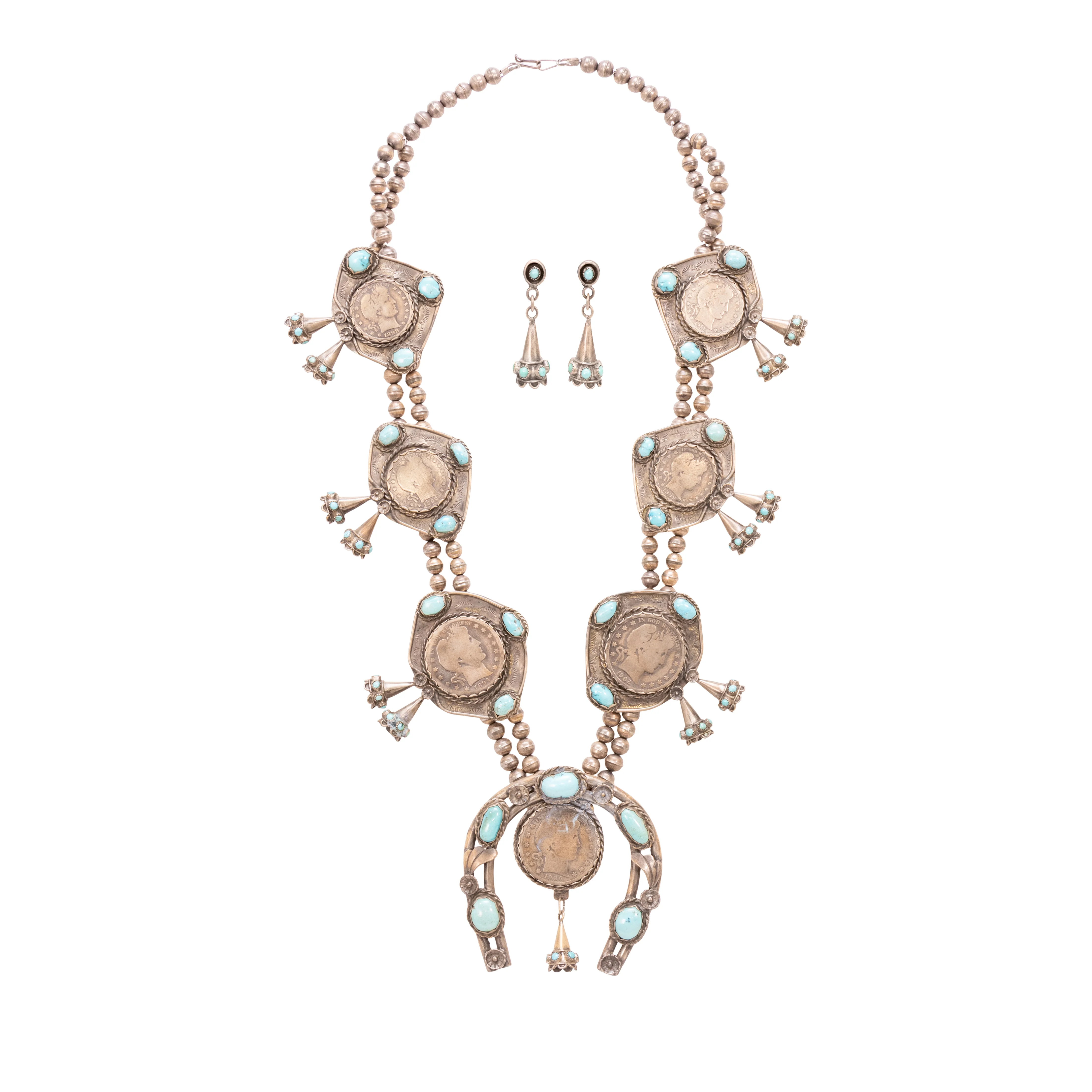
Navajo Silver Dollar Coin Squash Blossom
Navajo squash blossom and earring set. Beaded blossoms with three silver dollars dated 1894, 1902, and 1906; and four silver half dollars dated 1898, 1892, 1899 and 1911. The turquoise is from the Sleeping Beauty Mine in Arizona. Necklace and matching earrings. Old Pawn. Acquired from a Navajo trader.
The Navajo word for the squash blossom bead literally means “bead that spreads out”. This tri-petal form first appeared about 1880. Scholars believe that this flower motif was introduced by the Spanish as a variation of the pomegranate flower blossom, and the Navajo adapted it as a symbol of their revered squash. Initially the necklaces were rather simple with the tri-petal silver beads interspersed with rather plain beads. In time, stones were added to the blossom beads as demonstrated in our collection. According to the Navajo, the Naja is strictly decorative; however, it has always been held in high regard by the Navajo and other peoples.
PERIOD: First Half 20th Century
ORIGIN: Southwest - Navajo, Native American
SIZE: Length: 26 3/4" Naja: 8 1/2"
Navajo squash blossom and earring set. Beaded blossoms with three silver dollars dated 1894, 1902, and 1906; and four silver half dollars dated 1898, 1892, 1899 and 1911. The turquoise is from the Sleeping Beauty Mine in Arizona. Necklace and matching earrings. Old Pawn. Acquired from a Navajo trader.
The Navajo word for the squash blossom bead literally means “bead that spreads out”. This tri-petal form first appeared about 1880. Scholars believe that this flower motif was introduced by the Spanish as a variation of the pomegranate flower blossom, and the Navajo adapted it as a symbol of their revered squash. Initially the necklaces were rather simple with the tri-petal silver beads interspersed with rather plain beads. In time, stones were added to the blossom beads as demonstrated in our collection. According to the Navajo, the Naja is strictly decorative; however, it has always been held in high regard by the Navajo and other peoples.
PERIOD: First Half 20th Century
ORIGIN: Southwest - Navajo, Native American
SIZE: Length: 26 3/4" Naja: 8 1/2"
$7,500.00
Navajo Silver Dollar Coin Squash Blossom—
$7,500.00
Description
Navajo squash blossom and earring set. Beaded blossoms with three silver dollars dated 1894, 1902, and 1906; and four silver half dollars dated 1898, 1892, 1899 and 1911. The turquoise is from the Sleeping Beauty Mine in Arizona. Necklace and matching earrings. Old Pawn. Acquired from a Navajo trader.
The Navajo word for the squash blossom bead literally means “bead that spreads out”. This tri-petal form first appeared about 1880. Scholars believe that this flower motif was introduced by the Spanish as a variation of the pomegranate flower blossom, and the Navajo adapted it as a symbol of their revered squash. Initially the necklaces were rather simple with the tri-petal silver beads interspersed with rather plain beads. In time, stones were added to the blossom beads as demonstrated in our collection. According to the Navajo, the Naja is strictly decorative; however, it has always been held in high regard by the Navajo and other peoples.
PERIOD: First Half 20th Century
ORIGIN: Southwest - Navajo, Native American
SIZE: Length: 26 3/4" Naja: 8 1/2"