🎉 Up to 70% Off Selected ItemsShop Sale
Ojibwe Three Figure Totem
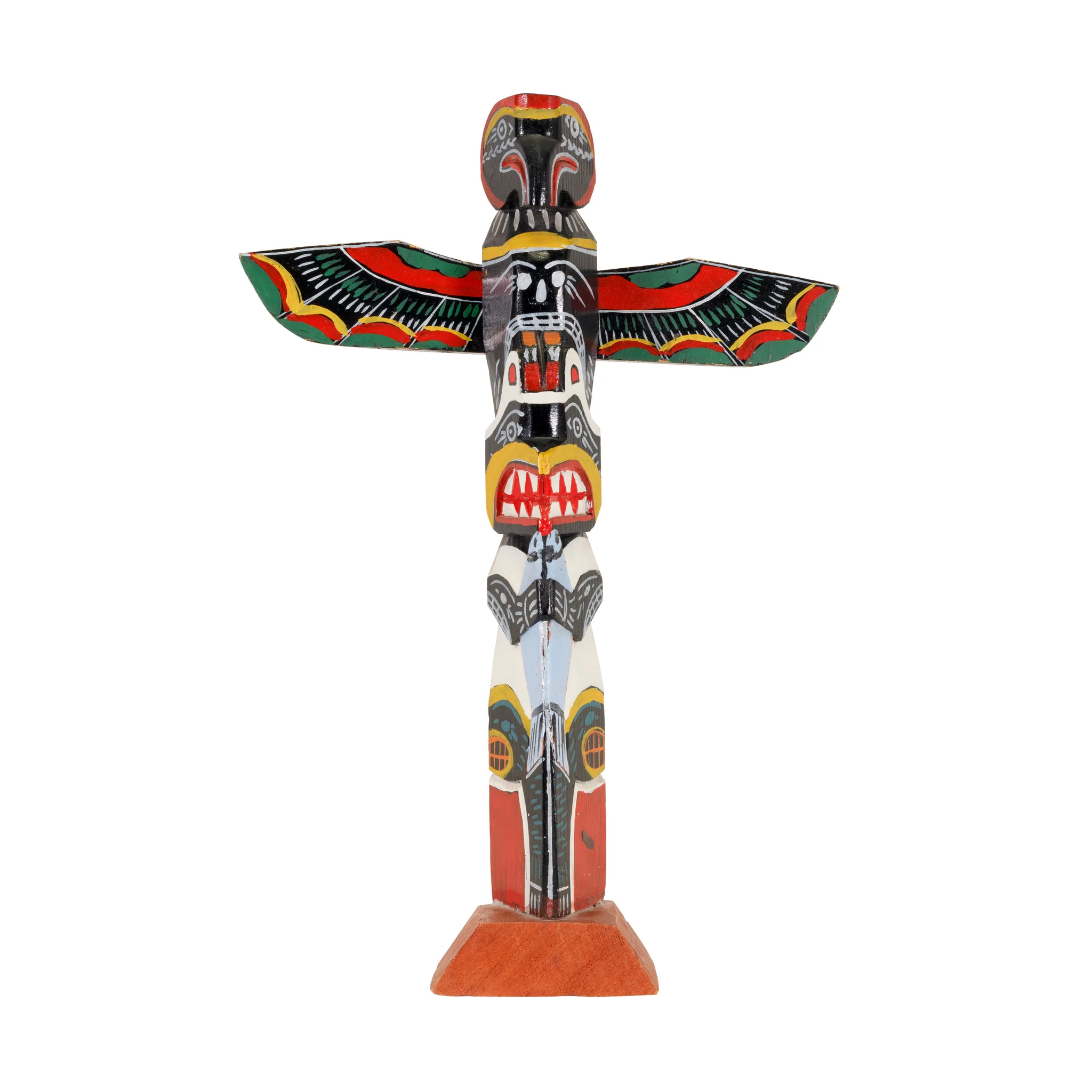
This three-figure model pole depicts a thunderbird over a bear holding a salmon. This pole would have been made in Ontario, Canada, by an Ojibwe artist for sale to tourists.
Although totem poles were not historically made by Indigenous peoples outside of the northern Northwest Coast, by the early 20th century, totem poles had become synonymous with “Indian-ness” and many Native peoples across North America started making model poles to sell to tourists and accommodate that expectation. This is a particularly nice example and is visually closer to Northwest Coast poles than most poles from the Great Lakes region. 13"H x 9"W
The Ojibwe people can be found through Ontario and into Montana. The name “Ojibwe” (meaning “puckered up”) was given to them by other tribes, referencing their traditional moccasins with a puckered seam on top. The Ojibwe call themselves “Anishinaabeg”, meaning “True People.” Archaeological and linguistic evidence along with tribal oral tradition suggests that Ojibwe, Ottawa, and Potawatomi all originated from the same tribe and eventually split into three different groups.
PERIOD: Mid 20th Century
ORIGIN: Eastern Woodlands - Ojibwe, Native American
SIZE: 13"H x 9"W
This three-figure model pole depicts a thunderbird over a bear holding a salmon. This pole would have been made in Ontario, Canada, by an Ojibwe artist for sale to tourists.
Although totem poles were not historically made by Indigenous peoples outside of the northern Northwest Coast, by the early 20th century, totem poles had become synonymous with “Indian-ness” and many Native peoples across North America started making model poles to sell to tourists and accommodate that expectation. This is a particularly nice example and is visually closer to Northwest Coast poles than most poles from the Great Lakes region. 13"H x 9"W
The Ojibwe people can be found through Ontario and into Montana. The name “Ojibwe” (meaning “puckered up”) was given to them by other tribes, referencing their traditional moccasins with a puckered seam on top. The Ojibwe call themselves “Anishinaabeg”, meaning “True People.” Archaeological and linguistic evidence along with tribal oral tradition suggests that Ojibwe, Ottawa, and Potawatomi all originated from the same tribe and eventually split into three different groups.
PERIOD: Mid 20th Century
ORIGIN: Eastern Woodlands - Ojibwe, Native American
SIZE: 13"H x 9"W
$500.00
Ojibwe Three Figure Totem—
$500.00
Description
This three-figure model pole depicts a thunderbird over a bear holding a salmon. This pole would have been made in Ontario, Canada, by an Ojibwe artist for sale to tourists.
Although totem poles were not historically made by Indigenous peoples outside of the northern Northwest Coast, by the early 20th century, totem poles had become synonymous with “Indian-ness” and many Native peoples across North America started making model poles to sell to tourists and accommodate that expectation. This is a particularly nice example and is visually closer to Northwest Coast poles than most poles from the Great Lakes region. 13"H x 9"W
The Ojibwe people can be found through Ontario and into Montana. The name “Ojibwe” (meaning “puckered up”) was given to them by other tribes, referencing their traditional moccasins with a puckered seam on top. The Ojibwe call themselves “Anishinaabeg”, meaning “True People.” Archaeological and linguistic evidence along with tribal oral tradition suggests that Ojibwe, Ottawa, and Potawatomi all originated from the same tribe and eventually split into three different groups.
PERIOD: Mid 20th Century
ORIGIN: Eastern Woodlands - Ojibwe, Native American
SIZE: 13"H x 9"W