🎉 Up to 70% Off Selected ItemsShop Sale
1 / 4
Plains Elk Antler Hide Scraper
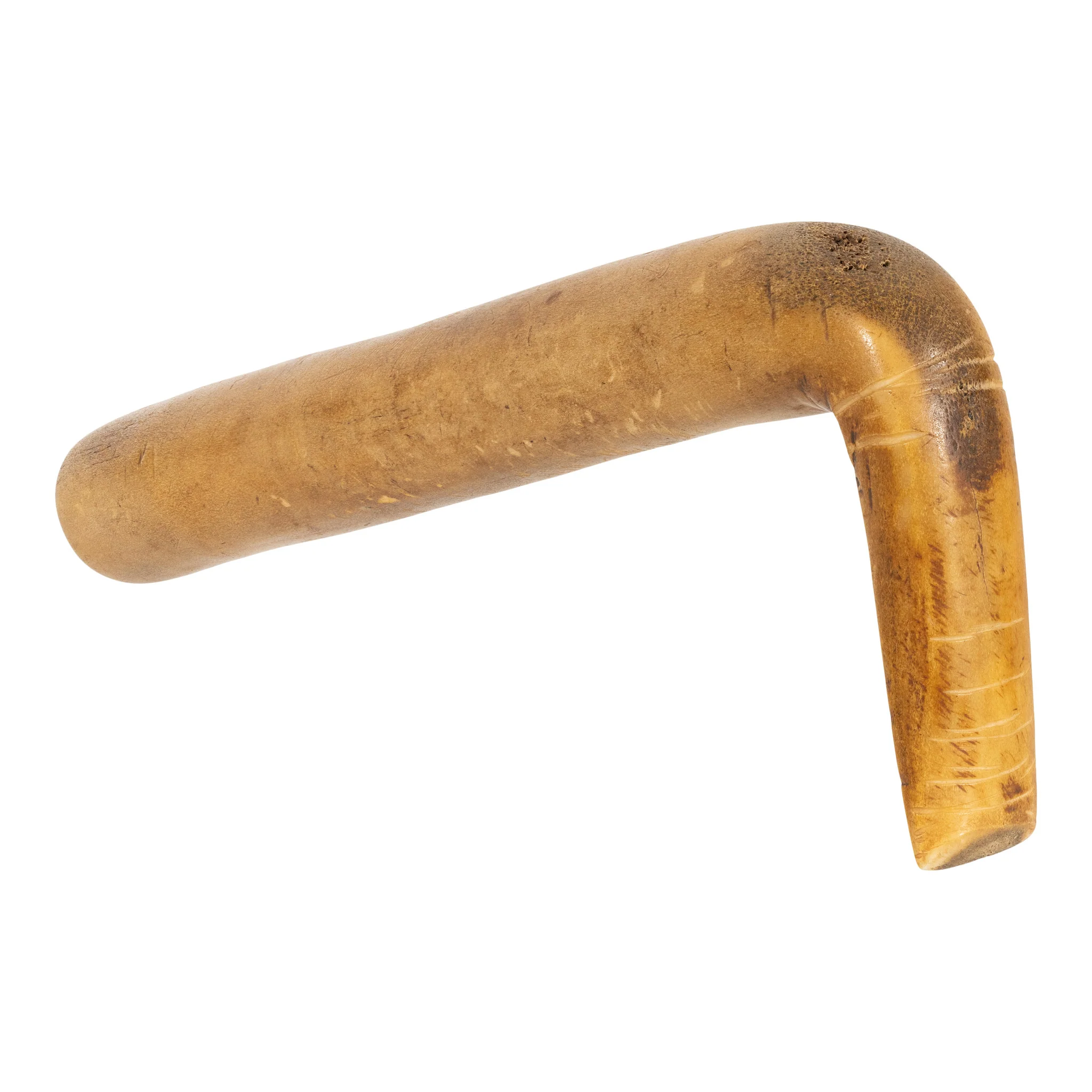
Plains elk antler hide scraper with some linear decorations on top. This is wonderful example of an elk scraper or hide flesher known as a "wahintki" in the Lakota language. Made from an elk antler and an iron blade hafted to the curved tip with a leather cord. This section of elk antler was taken from between the second and third tines, the natural curve and durability of the material was ideal for crafting tools that were strong and long lasting; indeed, this handle may be much older than the iron blade that was obtained after European contact. Antler scrapers were precious and passed down from mother to daughter, often serving many generations to scrape hides clean before tanning.
PERIOD: 19th Century
ORIGIN: Great Basin - Unknown, Native American
SIZE: 11 1/4"
Plains elk antler hide scraper with some linear decorations on top. This is wonderful example of an elk scraper or hide flesher known as a "wahintki" in the Lakota language. Made from an elk antler and an iron blade hafted to the curved tip with a leather cord. This section of elk antler was taken from between the second and third tines, the natural curve and durability of the material was ideal for crafting tools that were strong and long lasting; indeed, this handle may be much older than the iron blade that was obtained after European contact. Antler scrapers were precious and passed down from mother to daughter, often serving many generations to scrape hides clean before tanning.
PERIOD: 19th Century
ORIGIN: Great Basin - Unknown, Native American
SIZE: 11 1/4"
$2,200.00
Plains Elk Antler Hide Scraper—
$2,200.00
Description
Plains elk antler hide scraper with some linear decorations on top. This is wonderful example of an elk scraper or hide flesher known as a "wahintki" in the Lakota language. Made from an elk antler and an iron blade hafted to the curved tip with a leather cord. This section of elk antler was taken from between the second and third tines, the natural curve and durability of the material was ideal for crafting tools that were strong and long lasting; indeed, this handle may be much older than the iron blade that was obtained after European contact. Antler scrapers were precious and passed down from mother to daughter, often serving many generations to scrape hides clean before tanning.
PERIOD: 19th Century
ORIGIN: Great Basin - Unknown, Native American
SIZE: 11 1/4"