🎉 Up to 70% Off Selected ItemsShop Sale

1 / 4
Quinault Basketry Dolls
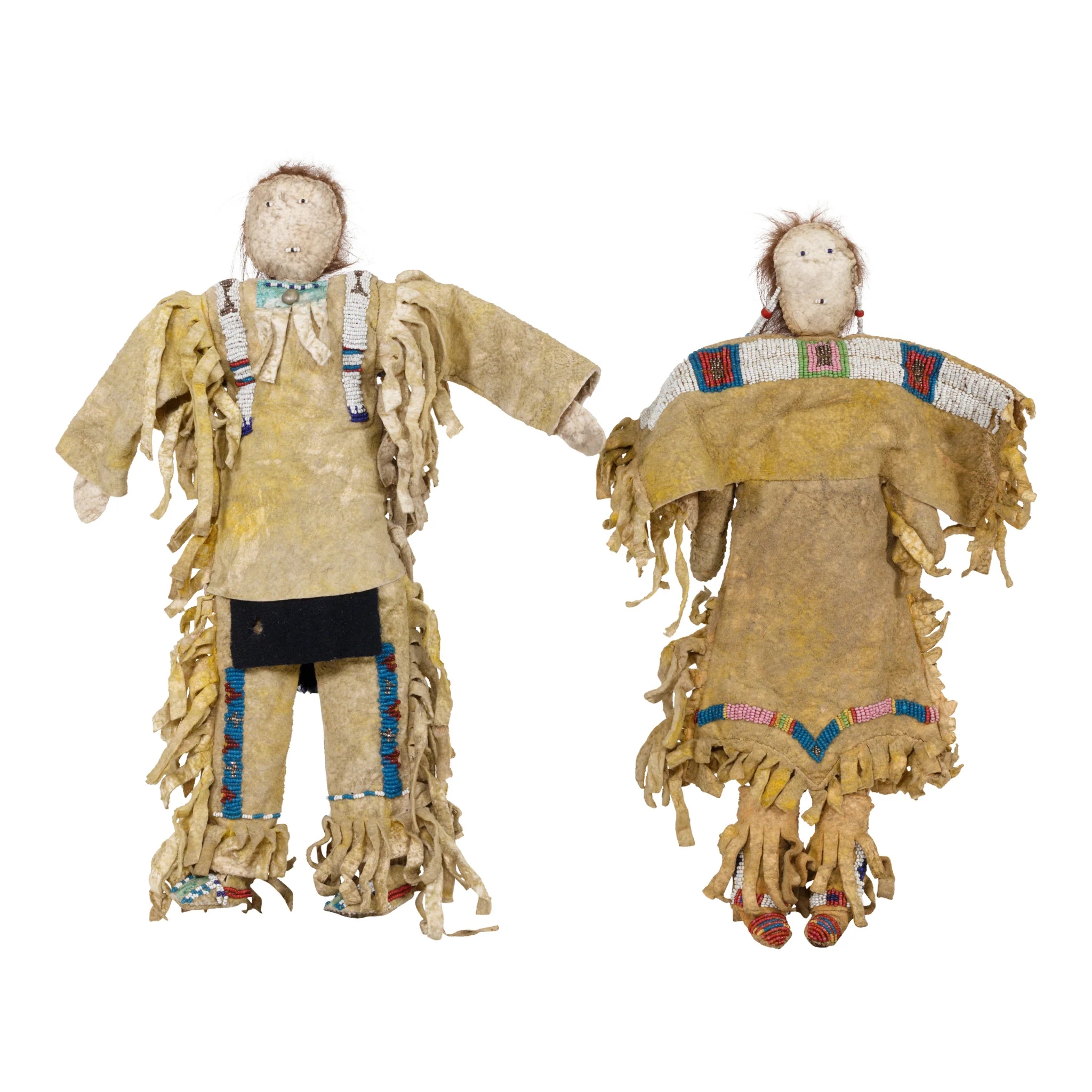
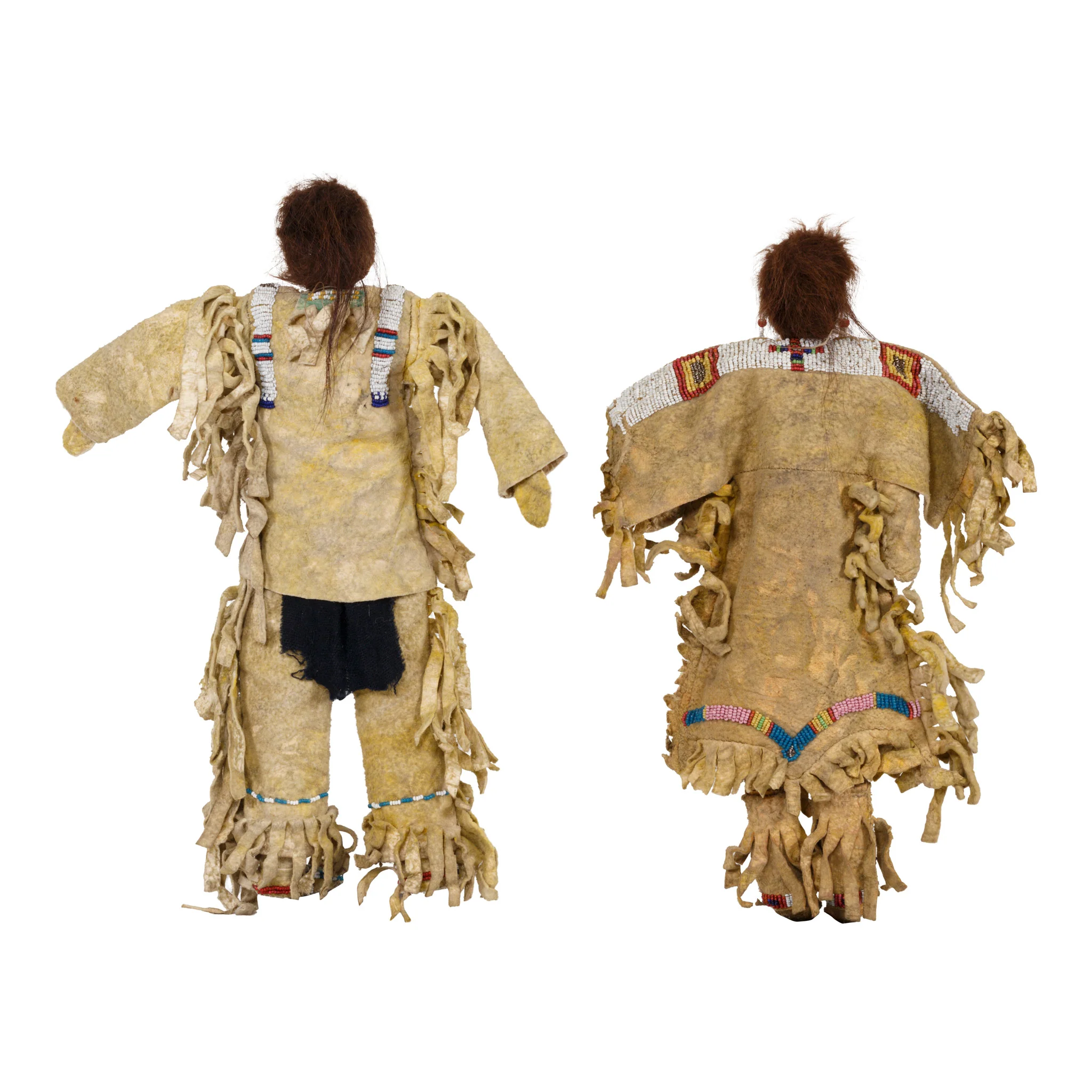
Vintage male and female Quinalt woven basketry dolls. Woven basketry dolls such as this pair have historically been made by Coast Salish people from the Olympic Peninsula and Puget Sound and by the adjacent Plateau tribes toward the interiors of present-day Washington State and Oregon.
Woven from finely spilt grass and cedar bark, these dolls were customarily made in pairs, often Man and Woman, who were depicted as either wearing Euro-American clothing or more customary garb. This pair is interesting for having an example of both. The taller figure is a Native Man in what looks like regalia with braided hair on the top of his head.
He features brightly dyed pink and yellow grasses that accentuate the details of his implied traditional clothing. The shorter doll is a Woman figure shown in a Euro- American/Western hat and dress and may represent a Native woman in European clothes or a non-Native woman.
Her face is depicted with characteristically heavy Northwest Coast “formline” eyebrows, which may support her intended identity being a Native woman. Her hat is woven in cedar bark and grass, while her dress is imbricated with dyed-pink cedar bands around her waist and the skirt.
Quinault dolls are distinguished from the work of their neighbors by the higher number of weaves per inch and a tighter overall presentation in their construction. 10 1/2", 7 1/2"
PERIOD: Mid 20th Century
ORIGIN: Plateau - Salish, Native American
SIZE: 10 1/2", 7 1/2"
Vintage male and female Quinalt woven basketry dolls. Woven basketry dolls such as this pair have historically been made by Coast Salish people from the Olympic Peninsula and Puget Sound and by the adjacent Plateau tribes toward the interiors of present-day Washington State and Oregon.
Woven from finely spilt grass and cedar bark, these dolls were customarily made in pairs, often Man and Woman, who were depicted as either wearing Euro-American clothing or more customary garb. This pair is interesting for having an example of both. The taller figure is a Native Man in what looks like regalia with braided hair on the top of his head.
He features brightly dyed pink and yellow grasses that accentuate the details of his implied traditional clothing. The shorter doll is a Woman figure shown in a Euro- American/Western hat and dress and may represent a Native woman in European clothes or a non-Native woman.
Her face is depicted with characteristically heavy Northwest Coast “formline” eyebrows, which may support her intended identity being a Native woman. Her hat is woven in cedar bark and grass, while her dress is imbricated with dyed-pink cedar bands around her waist and the skirt.
Quinault dolls are distinguished from the work of their neighbors by the higher number of weaves per inch and a tighter overall presentation in their construction. 10 1/2", 7 1/2"
PERIOD: Mid 20th Century
ORIGIN: Plateau - Salish, Native American
SIZE: 10 1/2", 7 1/2"
$525.00
Original: $1,500.00
-65%Quinault Basketry Dolls—
$1,500.00
$525.00Description
Vintage male and female Quinalt woven basketry dolls. Woven basketry dolls such as this pair have historically been made by Coast Salish people from the Olympic Peninsula and Puget Sound and by the adjacent Plateau tribes toward the interiors of present-day Washington State and Oregon.
Woven from finely spilt grass and cedar bark, these dolls were customarily made in pairs, often Man and Woman, who were depicted as either wearing Euro-American clothing or more customary garb. This pair is interesting for having an example of both. The taller figure is a Native Man in what looks like regalia with braided hair on the top of his head.
He features brightly dyed pink and yellow grasses that accentuate the details of his implied traditional clothing. The shorter doll is a Woman figure shown in a Euro- American/Western hat and dress and may represent a Native woman in European clothes or a non-Native woman.
Her face is depicted with characteristically heavy Northwest Coast “formline” eyebrows, which may support her intended identity being a Native woman. Her hat is woven in cedar bark and grass, while her dress is imbricated with dyed-pink cedar bands around her waist and the skirt.
Quinault dolls are distinguished from the work of their neighbors by the higher number of weaves per inch and a tighter overall presentation in their construction. 10 1/2", 7 1/2"
PERIOD: Mid 20th Century
ORIGIN: Plateau - Salish, Native American
SIZE: 10 1/2", 7 1/2"